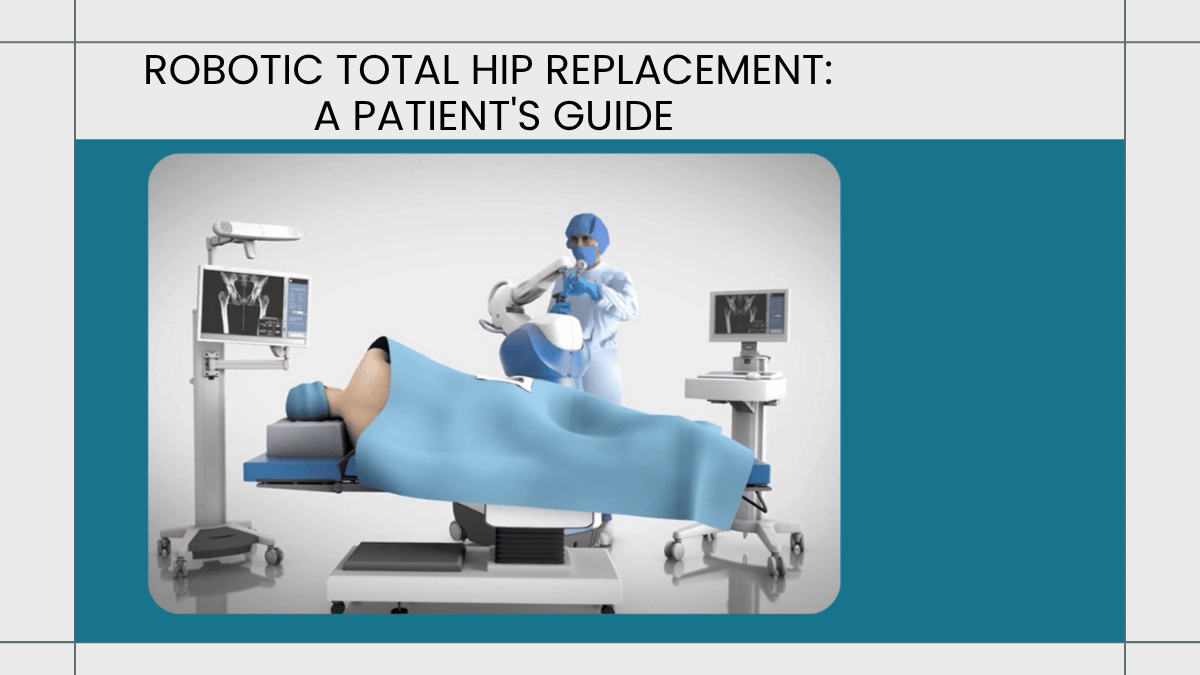
Robotic total hip replacement is a surgical procedure in which the damaged hip joint is replaced with artificial components, using a robotic system to assist with precise implant positioning. The surgeon remains in control throughout. Robotic assistance helps with pre-operative planning, cup placement, and alignment - based on each patient's anatomy.
What is total hip replacement?
The hip is a ball-and-socket joint. In hip replacement, the damaged femoral head (the ball) and the acetabular socket surface are removed and replaced with artificial implants. These components are designed to replicate the smooth movement of a healthy hip, reduce pain, and restore range of motion.
Hip replacement is considered when the hip joint is severely damaged - due to arthritis, avascular necrosis, deformity, or failed earlier surgery - and pain, stiffness, and loss of function persist despite non-surgical management.
What conditions can lead to hip replacement?
Common reasons a patient may need hip replacement include:
- Osteoarthritis of the hip - gradual breakdown of the cartilage protecting the joint.
- Avascular necrosis of the femoral head - loss of blood supply causing bone collapse within the hip joint.
- Rheumatoid arthritis affecting the hip.
- Post-traumatic arthritis following a hip fracture or dislocation.
- Developmental hip conditions or structural deformities.
- Severe, persistent pain and restricted movement that significantly affect daily life.
What does robotic assistance add to hip replacement?
Implant positioning in hip replacement is critical. The cup angle, femoral stem alignment, leg length, and offset must all be planned carefully. If implant position is suboptimal, the patient may be at risk of instability, impingement, unequal leg length, or accelerated implant wear.
A robotic system allows the surgeon to plan the procedure in precise detail using the patient's own imaging data, and then execute that plan intra-operatively with real-time guidance. This can help the surgeon reproduce the planned implant position with greater consistency than manual instruments alone.
The American Academy of Orthopaedic Surgeons describes total hip replacement as a safe and effective procedure that can relieve pain, increase motion, and help patients return to normal everyday activities. (OrthoInfo, AAOS - Total Hip Replacement)
Who may benefit from robotic total hip replacement?
Robotic total hip replacement is typically considered for patients with advanced hip joint damage who have significant pain and functional limitation despite appropriate non-surgical care. Common symptoms that prompt evaluation include:
- Groin, thigh, buttock, or referred knee pain that affects walking.
- Limp or altered gait caused by hip pain or stiffness.
- Difficulty rising from a low chair, climbing stairs, or putting on footwear.
- Night pain or pain at rest in the hip.
- Loss of hip range of motion.
- Significant reduction in independence or daily function.
A full clinical evaluation - including history, examination, X-rays, and assessment of the patient's overall health and lifestyle needs - is necessary before advising surgery.
What does recovery involve?
Recovery after hip replacement typically begins with early mobilisation - most patients stand and walk with support within one to two days of surgery. Pain is managed with a structured protocol. Physiotherapy guides the patient through exercises to restore strength, balance, and confidence in walking.
Patients are educated on movement precautions, wound care, and activity restrictions during the healing period. Return to daily activities varies by patient but is typically measured over several weeks to a few months. Full functional recovery depends on age, pre-operative fitness, degree of joint damage, and adherence to rehabilitation.
Written by Dr Shrishti Patil, MS Ortho, Consultant Orthopaedic and Robotic Joint Replacement Surgeon, SPARSH Hospital, Hennur Road, Bengaluru.
To book a consultation with Dr Shrishti Patil at SPARSH Hospital, Hennur Road, Bengaluru,


Add a Comment