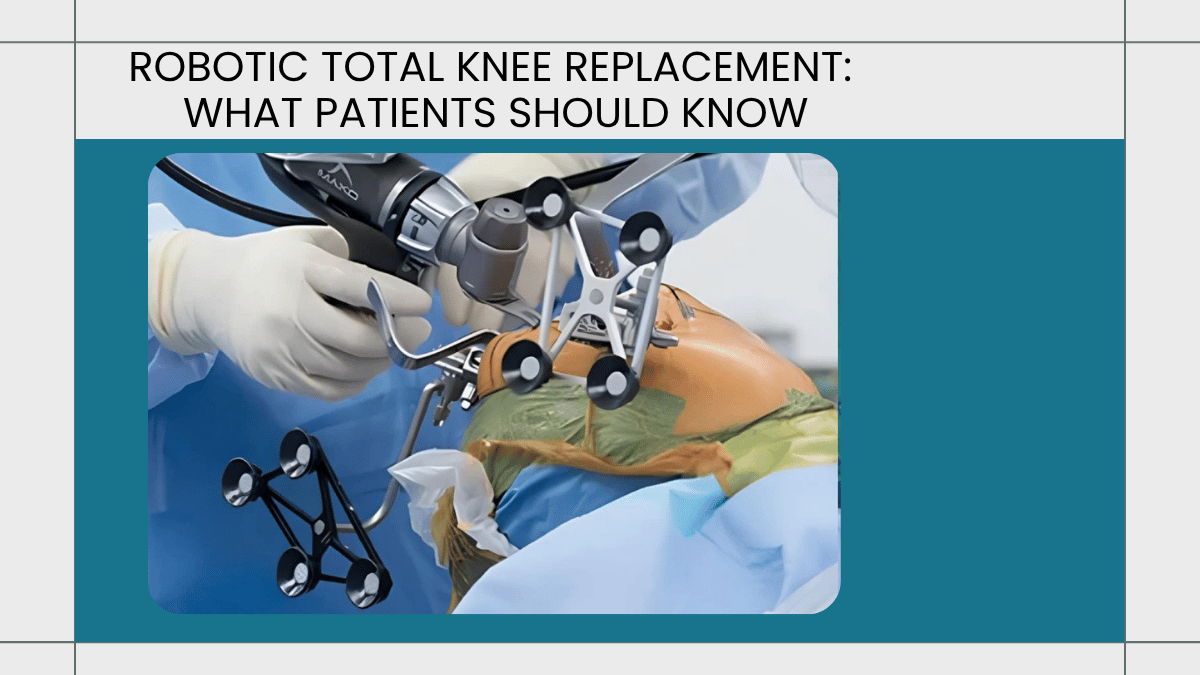
Robotic total knee replacement is a surgery in which a robotic system helps the surgeon plan and perform knee replacement with greater precision. The surgeon remains in control throughout. The robot assists with planning bone cuts, aligning the implant, and positioning the components accurately - based on the patient's own anatomy.
What is total knee replacement?
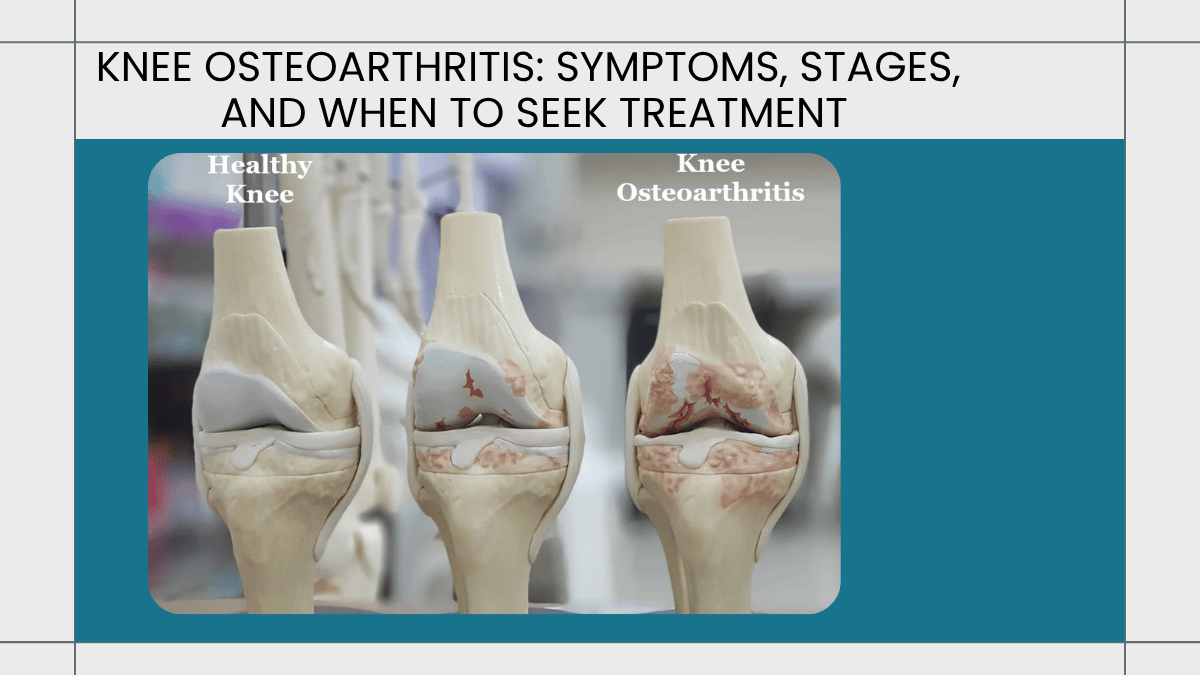
Total knee replacement is a surgery in which the damaged surfaces of the knee joint - the ends of the thigh bone, the shin bone, and in some cases the underside of the kneecap - are removed and replaced with artificial components. These components are designed to reduce pain, restore alignment, and allow the knee to move more freely.
The procedure is used when knee arthritis or joint damage is severe enough that pain, stiffness, and loss of function persist despite non-surgical treatment such as physiotherapy, medications, and joint injections.
What does robotic assistance add to knee replacement?
In conventional knee replacement, the surgeon uses manual instruments and visual judgement to prepare the bone and position the implant. In robotic-assisted knee replacement, a computer system maps the patient's knee anatomy in detail — before or during surgery - and guides the surgeon as they make bone cuts and place the implant.
The robotic system does not operate independently. It acts as a precision tool, providing the surgeon with real-time guidance on alignment, implant sizing, and positioning. This can reduce variability and help the surgeon personalise the plan to each patient's anatomy.
The American Academy of Orthopaedic Surgeons notes that robotic instruments can provide sensory feedback to assist surgeons in precisely removing damaged bone and cartilage and replacing it with prosthetic components. (OrthoInfo, AAOS — Robotic-Assisted Joint Replacement)
Who may need robotic total knee replacement?
Robotic total knee replacement may be considered for patients with advanced knee arthritis who continue to have significant pain and functional limitation despite appropriate non-surgical care. Common indications include:
- Persistent pain while walking, climbing stairs, or during daily activity.
- Pain that disturbs sleep.
- Stiffness and markedly reduced knee movement.
- Bow-leg or knock-knee deformity caused by arthritis.
- Dependence on pain medication for routine activities.
- Inability to perform work, household tasks, or personal care independently.
The decision is not based on X-ray findings alone. A full consultation - including symptom history, clinical examination, imaging, and assessment of the patient's activity levels and expectations - is necessary before recommending surgery.
Is robotic knee replacement right for every patient?
No. Robotic technology is a tool in the surgeon's hands, not a universal solution. Some patients are better managed with non-surgical treatment. Others may be well-served by conventional knee replacement. The value of robotic assistance depends on the patient's anatomy, the degree of deformity, the complexity of the case, and clinical judgement.
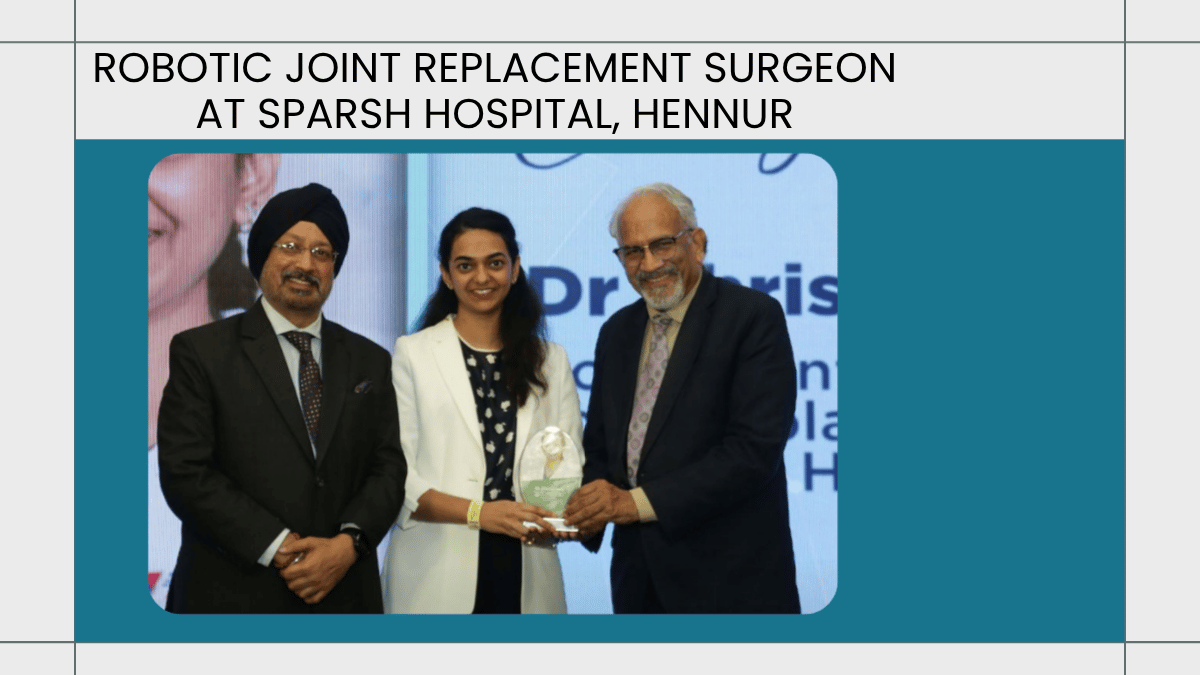
A consultation with Dr Shrishti Patil at SPARSH Hospital, Hennur Road, will include a full evaluation of whether robotic knee replacement is appropriate - and, if surgery is advised, what the realistic goals and recovery trajectory look like.
What does recovery involve?
Recovery after total knee replacement involves early mobilisation, pain management, physiotherapy, and a gradual return to daily activities. Most patients begin standing and walking with support within the first one to two days after surgery, under supervised rehabilitation.
Physiotherapy continues over several weeks, focusing on knee movement, muscle strength, balance, and walking confidence. Full recovery- including return to most daily activities - typically takes several months and depends on the patient's age, fitness, degree of pre-operative joint damage, and commitment to rehabilitation.
The outcome of knee replacement depends not only on the surgery but equally on rehabilitation, patient expectations, and follow-up care.
Written by Dr Shrishti Patil, MS Ortho, Consultant Orthopaedic and Robotic Joint Replacement Surgeon, SPARSH Hospital, Hennur Road, Bengaluru.
To book a consultation with Dr Shrishti Patil at SPARSH Hospital, Hennur Road, Bengaluru

Add a Comment