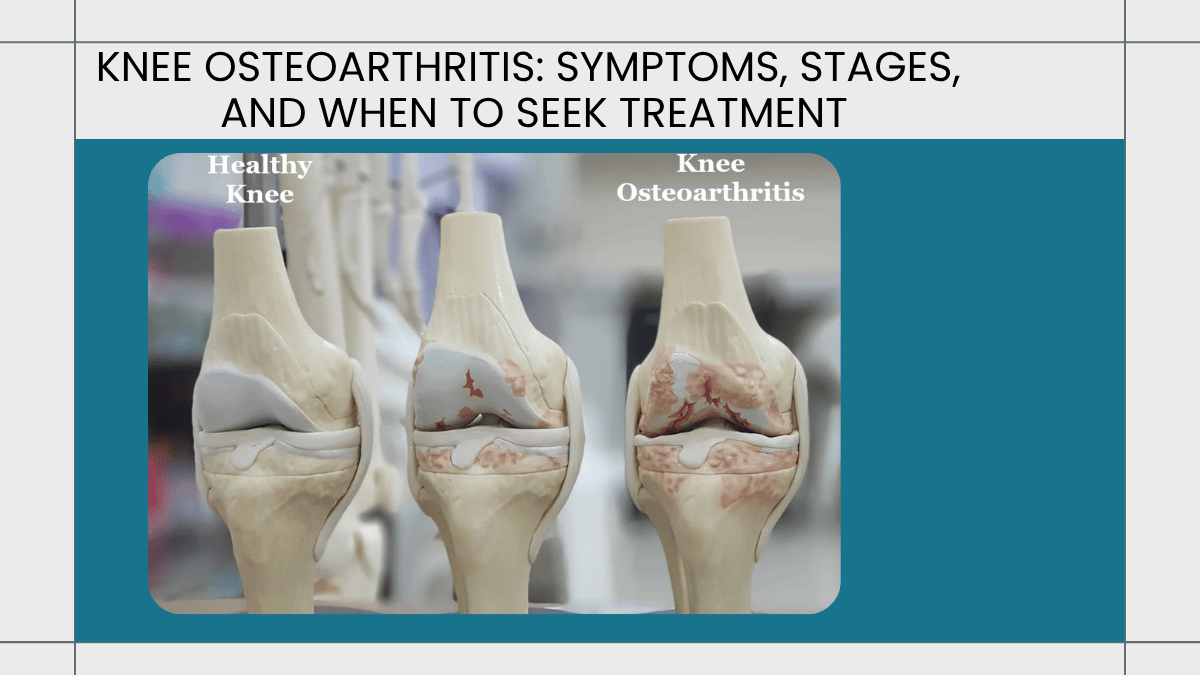
Knee osteoarthritis is a progressive joint condition in which the cartilage inside the knee gradually wears down, causing pain, stiffness, swelling, and reduced mobility. It is one of the most common causes of chronic knee pain in adults. Treatment depends on the stage of arthritis and ranges from physiotherapy and lifestyle changes to joint replacement in advanced cases.
What happens inside the knee in osteoarthritis?
A healthy knee has a layer of smooth cartilage covering the ends of the bones, allowing them to glide over each other during movement. In osteoarthritis, this cartilage gradually breaks down. As it thins, the bones begin to rub more directly against each other, causing friction, inflammation, and pain. Over time, the joint space narrows, the surrounding bone may thicken or develop spurs, and the knee may become visibly deformed.
What are the common symptoms?
Symptoms of knee osteoarthritis typically develop gradually and may include:
- Pain while walking, climbing stairs, or after prolonged standing.
- Stiffness after sitting for long periods or on waking in the morning.
- Swelling around the knee, especially after activity.
- A grinding, clicking, or crackling sensation during knee movement.
- Difficulty squatting, sitting cross-legged, or rising from a low chair.
- Bow-leg or knock-knee deformity as the joint wears asymmetrically.
- Reduced walking distance or tolerance for activity.
- Increasing reliance on pain medication to manage daily activities.
In early osteoarthritis, pain is typically brought on by activity and relieved by rest. In more advanced stages, pain may be present even at rest or overnight.
Why does knee osteoarthritis develop?
Age is a contributing factor, but osteoarthritis is not simply a consequence of ageing. Several factors increase the risk of developing knee osteoarthritis:
- Previous knee injury - including ligament tears, meniscus injuries, or fractures.
- Excess body weight - which increases the load on the knee joint with every step.
- Family history of osteoarthritis.
- Long-standing knee deformity, such as bow-leg or knock-knee.
- Repetitive occupational or physical stress on the knee.
- Weakness in the muscles supporting the knee.
- Inflammatory joint disease, such as rheumatoid arthritis.
Is every knee pain osteoarthritis?
No. Knee pain can arise from ligament injuries, meniscus tears, inflammatory arthritis, bursitis, referred pain from the hip or lumbar spine, or other conditions. A clinical examination is essential to diagnose osteoarthritis accurately and rule out other causes.
A consultation typically includes assessment of walking pattern, deformity, swelling, joint tenderness, range of motion, ligament stability, and X-rays. Additional imaging may be requested in selected cases.
What are the non-surgical treatment options?
In early and moderate knee osteoarthritis, non-surgical management is the first approach. Options include:
- Physiotherapy - strengthening the muscles around the knee to reduce joint load and improve stability.
- Weight management - reducing body weight to decrease stress on the knee.
- Activity modification - adjusting physical activity to reduce aggravating movements.
- Pain medications - used appropriately and under medical guidance.
- Joint injections - including corticosteroid or hyaluronic acid injections in selected patients.
- Assistive devices - walking aids or knee braces in specific cases.
- Low-impact exercise - swimming, cycling, and walking are generally well-tolerated.
When is knee replacement considered?
Knee replacement is considered when arthritis is advanced and symptoms significantly affect daily function despite appropriate non-surgical treatment. A referral to a joint replacement surgeon is warranted when:
- Pain regularly interrupts sleep.
- Climbing stairs or walking short distances causes significant discomfort.
- Deformity is visible and worsening.
- Physiotherapy and medications have been adequately tried and no longer provide meaningful relief.
- Quality of life - the ability to work, manage daily tasks, or move independently - is significantly compromised.
The decision for surgery is based on the full clinical picture, not on X-ray appearances alone. Many patients with severe X-ray changes have manageable symptoms; others with moderate imaging findings have severe functional limitation. Both the patient and the surgeon assess the overall situation before surgery is recommended.
Written by Dr Shrishti Patil, MS Ortho, Consultant Orthopaedic and Robotic Joint Replacement Surgeon, SPARSH Hospital, Hennur Road, Bengaluru.
To book a consultation with Dr Shrishti Patil at SPARSH Hospital, Hennur Road, Bengaluru


Add a Comment