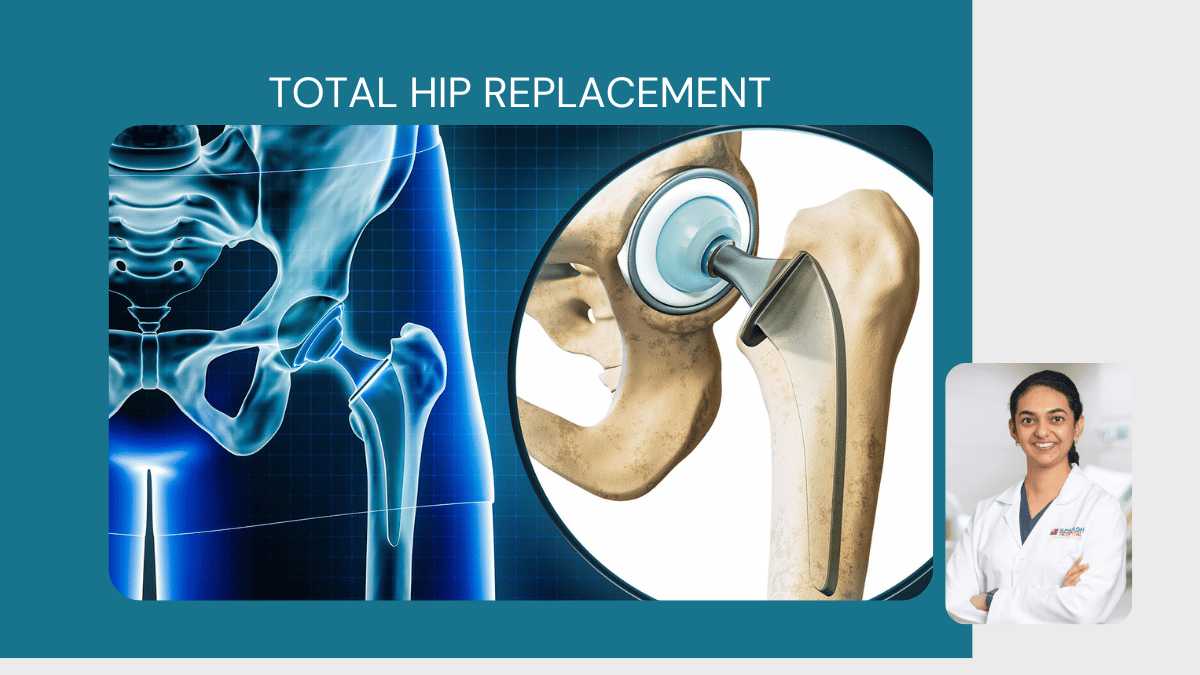
Total hip replacement (THR) is a surgical procedure in which the damaged hip joint - the femoral head and acetabular socket - is removed and replaced with artificial implants designed to restore smooth movement, relieve pain, and return the patient to full functional independence. It is among the most consistently successful procedures in orthopaedic surgery, with well-established long-term outcomes.
When is total hip replacement needed?
THR is recommended when the hip joint is severely damaged and pain, stiffness, or loss of mobility significantly affects daily life, despite appropriate non-surgical management. Common indications include advanced osteoarthritis of the hip, avascular necrosis of the femoral head, post-traumatic arthritis, rheumatoid arthritis affecting the hip, and selected fractures of the femoral neck in active patients.
Symptoms that typically prompt referral for THR include groin or thigh pain that affects walking, night pain or pain at rest, difficulty with routine activities such as rising from a chair or putting on footwear, and a visible limp. A thorough clinical assessment - history, examination, and hip X-rays - is needed before surgery is recommended.
What does the procedure involve?
In total hip replacement, the surgeon removes the damaged femoral head and resurfaces or replaces the acetabular socket. The femoral head is replaced with a metal or ceramic ball attached to a stem inserted into the femoral canal. The socket is lined with a cup - typically polyethylene bearing surface - into which the new femoral head articulates.
Implant selection - material, fixation method (cemented or uncemented), and bearing surface - is individualised based on the patient's age, bone quality, activity level, and anatomy. The procedure takes approximately 60 to 90 minutes under regional or general anaesthesia.
Recovery and rehabilitation
Early mobilisation is a central part of hip replacement recovery. Most patients stand and walk with support on the day of surgery. Physiotherapy addresses strength, balance, and gait. Return to daily activities is progressive and typically measured over a few weeks depending on individual factors.
Durability and outcomes
Modern hip replacement implants are designed to function well for over 20 years. Accurate implant positioning — which robotic assistance can support - is one factor that contributes to long-term stability, reduced wear and longevity. Regular follow-up with the surgeon is important for monitoring the implant and surrounding bone over time.
Written by Dr Shrishti Patil, MS Ortho, Consultant Orthopaedic and Robotic Joint Replacement Surgeon, SPARSH Hospital, Hennur Road, Bengaluru.
To book a consultation with Dr Shrishti Patil at SPARSH Hospital, Hennur Road, Bengaluru, visit linqmd.com/doctors/dr-shrishti-patil-joint-replacement-surgeon-hennur-bengaluru