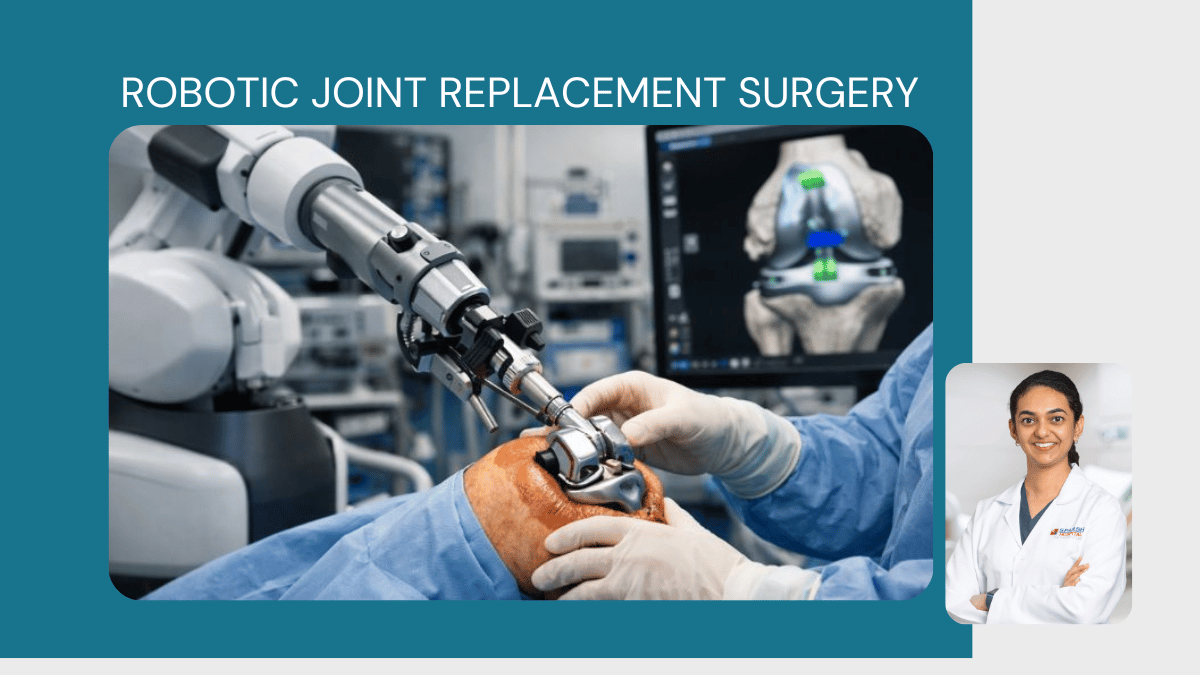
Robotic joint replacement surgery is a knee or hip replacement in which a robotic system assists the surgeon with pre-operative planning and intra-operative precision. The surgeon remains fully in control throughout the procedure. The robotic system provides detailed anatomical mapping, real-time guidance, and accuracy checks during bone preparation and implant placement - based on each patient's individual anatomy.
What does robotic assistance actually do?
In conventional joint replacement, the surgeon relies on manual instruments, visual landmarks, and experience to prepare the bone and position the implant. A robotic system adds technology to this process. Using pre-operative imaging and intra-operative bone mapping, the system creates a three-dimensional model of the patient's joint and allows the surgeon to plan the procedure in detail before a single incision or bone cut is made.
During surgery, the robotic system monitors the surgeon's movements in real time and provides guidance and physical boundaries to help ensure that bone preparation stays within the planned zone. This reduces variability, human errors and allows the surgeon to position the implant with a millimetre accuracy and a degree of consistency that is difficult to achieve with manual techniques alone.
What robotic system is used?
Dr Shrishti Patil holds MAKO robotic certification for total hip and total knee replacement — the Stryker MAKO system, which is one of the most extensively studied robotic platforms in orthopaedic surgery. Her training includes a fellowship at Epworth Hospital, Melbourne, and a hands-on observership with senior experienced surgeons and at the Stryker MAKO Robotic Centre in West Palm Beach, Florida.
Which patients may benefit?
- Robotic joint replacement is not universally required for every patient. Its value is most apparent in:
- Patients with significant deformity or complex anatomy where precise implant positioning is especially important.
- Younger, more active patients for whom implant longevity and optimal alignment are a higher priority.
- Patients undergoing hip replacement where cup position and leg length accuracy are critical to stability.
- Cases where the surgeon's plan may benefit from intra-operative verification against the patient's actual anatomy.
- A consultation with Dr Shrishti Patil will determine whether robotic-assisted surgery is appropriate for the individual patient's condition, anatomy, and expectations.
Is robotic joint replacement safer or more painful?
Robotic assistance does not change the fundamental nature of the surgery — the incision, anaesthetic approach, and recovery pathway are broadly similar to conventional joint replacement. The robotic system is a planning and precision tool, not a separate procedure. Recovery post robotic joint replacement surgery is faster due to reduced soft tissue damage and lesser pain.
Written by Dr Shrishti Patil, MS Ortho, Consultant Orthopaedic and Robotic Joint Replacement Surgeon, SPARSH Hospital, Hennur Road, Bengaluru.
To book a consultation with Dr Shrishti Patil at SPARSH Hospital, Hennur Road, Bengaluru, visit linqmd.com/doctors/dr-shrishti-patil-joint-replacement-surgeon-hennur-bengaluru.