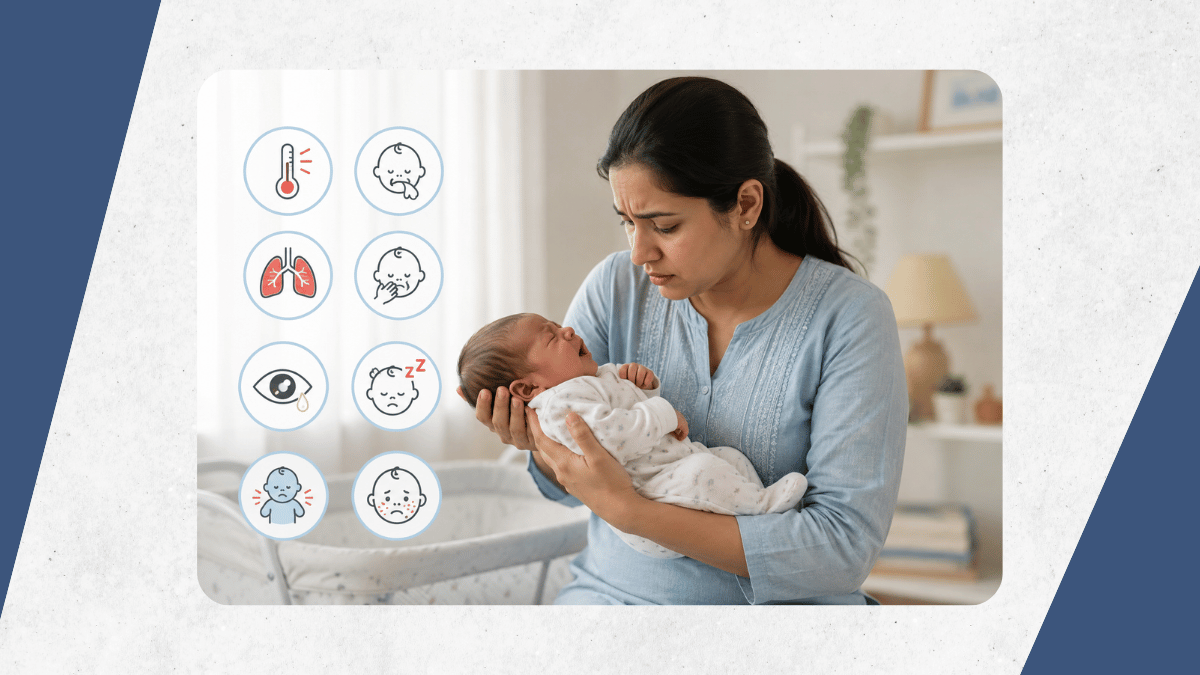
The first thirty days of a baby's life are among the most significant of any human being's existence. In four decades of paediatric practice and as the Founder-Director of Vatsalya Children's Hospital, Varanasi, I have seen how the outcome of a serious newborn illness often hinges not on the treatment available but on how quickly a family recognises that something is wrong and acts on it. This guide is written for every new parent in Varanasi and across Eastern Uttar Pradesh who wants to understand what normal looks like in a newborn baby and, more importantly, what should prompt an urgent call to a paediatrician.
What is normal in the first month of life?
Before discussing warning signs, it helps to establish what is normal. A healthy newborn feeds eight to twelve times in a 24-hour period and produces at least six to eight wet nappies a day by the end of the first week, which is the most reliable sign that feeding is adequate. Weight loss of up to 10 percent of birth weight in the first few days is expected, and most babies regain their birth weight by ten to fourteen days. Mild jaundice appearing after the second day and fading by the end of the second week is common and usually requires no treatment. A baby may have irregular breathing patterns during sleep, brief pauses of up to ten seconds, and occasional startles. These are part of normal newborn development and do not require intervention.
The umbilical cord stump dries and falls off between one and three weeks. Skin colour in the first days may vary with circulation. Newborns sleep for sixteen to eighteen hours in a 24-hour period, waking primarily to feed. Understanding this baseline makes it much easier to recognise when something is genuinely outside the range of normal.
Warning signs related to breathing
Breathing is the most urgent system to monitor in a newborn. A normal respiratory rate in a newborn is 40 to 60 breaths per minute. Certain patterns of breathing require prompt assessment. Signs of breathing difficulty in newborns include a rate persistently above 60 breaths per minute, grunting with each breath, flaring of the nostrils, drawing in of the skin between the ribs or above the breastbone with each breath, a bluish discolouration of the lips or around the mouth, and any episode where the baby stops breathing for more than twenty seconds.
These signs, particularly in combination, indicate that the baby is working harder than normal to breathe and should be assessed without delay. Respiratory distress in a newborn can progress rapidly, which is why these signs should never be attributed to normal newborn behaviour and left to resolve on their own.
Warning signs related to feeding and weight
Feeding difficulties in the newborn period are common but should not be dismissed. A baby who consistently refuses to feed, falls asleep immediately at the breast or bottle before taking an adequate amount, or shows no interest in feeding after the first 24 hours needs assessment. Persistent difficulty latching, a baby who feeds very briefly but seems unsatisfied, or one who feeds excessively without gaining weight may indicate a problem with newborn feeding problems that warrants paediatric review.
Weight monitoring in the first month is one of the most sensitive indicators of a newborn's wellbeing. Failure to regain birth weight by two weeks, weight loss beyond 10 percent in the first week, or any documented weight loss after the baby has started regaining weight should prompt a consultation. Poor weight gain in a newborn can be a sign of inadequate calorie intake, but it can also reflect an underlying medical condition that requires investigation.
Warning signs related to jaundice
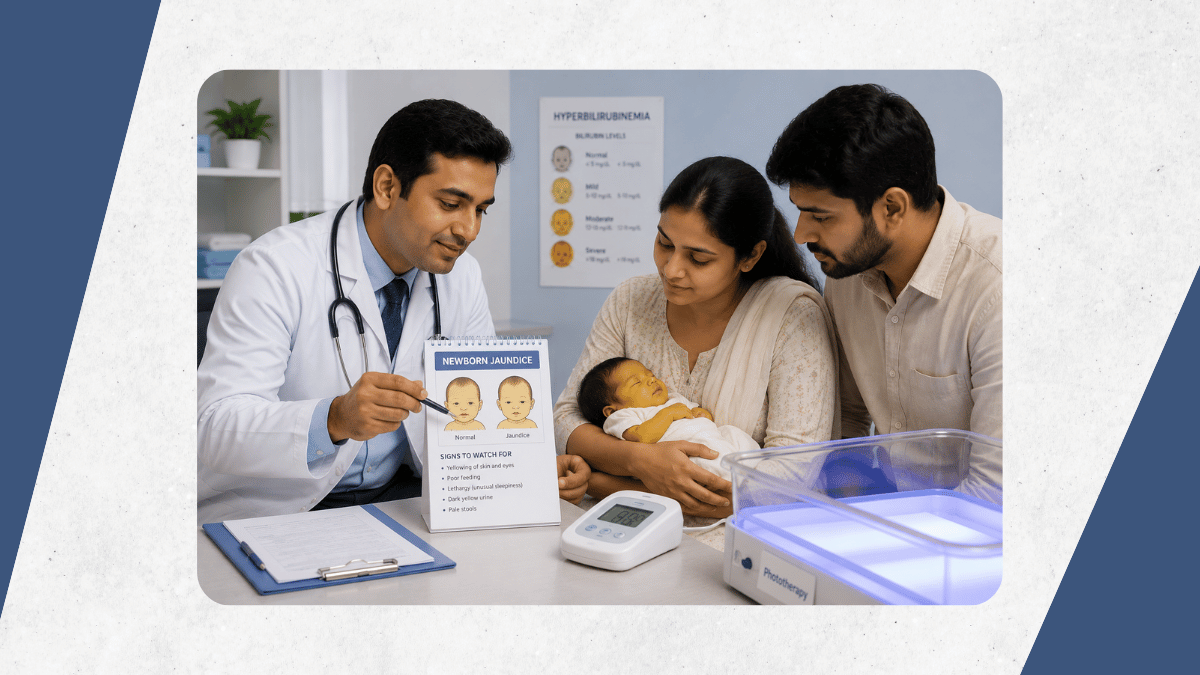
Newborn jaundice is the most common condition causing hospital readmission in the first month of life. Physiological jaundice, which appears after 24 hours, peaks around days three to five, and clears by two weeks, is part of normal newborn transition. Jaundice that appears within 24 hours of birth, jaundice that deepens rapidly, jaundice extending to the palms and soles, jaundice that persists beyond two weeks in a full-term baby, or jaundice accompanied by pale stools and dark urine are all patterns that require assessment.
Severe untreated jaundice can result in brain injury, which is why the threshold for seeking assessment should be low. At home, jaundice can be roughly assessed by pressing gently on the baby's skin in natural light and observing the underlying colour. However, visual assessment is unreliable, and any doubt about the degree of jaundice warrants a bilirubin measurement rather than a period of watchful waiting.
Warning signs related to temperature
Newborns have a limited ability to regulate their own body temperature, which makes both fever and hypothermia medically significant. A temperature above 38 degrees Celsius in a newborn under three months of age is always a medical emergency and requires immediate evaluation, regardless of how well the baby appears. Unlike older children and adults, a fever in newborn cannot be attributed to a viral illness and treated at home. It requires investigation to exclude serious bacterial infection, including meningitis and sepsis, which can deteriorate within hours.
Hypothermia, a temperature below 36.5 degrees Celsius, is equally serious. A baby who feels persistently cold to the touch, is not maintaining normal skin colour, or is unusually limp and difficult to rouse may be hypothermic. Newborns lose heat rapidly through their head and skin surface, and cold environments, inadequate clothing, or delayed feeding all contribute to hypothermia in the neonatal period.
Warning signs related to behaviour and tone
Changes in a newborn's behaviour and muscle tone are among the most sensitive indicators of serious illness. A baby who is unusually lethargic in newborn, difficult to rouse for feeds, limp when held, or unresponsive to normal stimuli requires urgent assessment. Equally, a baby who is unusually irritable, has a high-pitched cry that is different from their normal cry, or cannot be consoled despite adequate feeding may be signalling pain or neurological change.
Muscle tone changes in a newborn, particularly a baby who feels floppy rather than offering the natural resistance of a healthy newborn when lifted, should be taken seriously. Tone is one of the most sensitive indicators of neurological status in the neonatal period, and a change from the baby's baseline tone, whether towards floppiness or excessive stiffness, warrants a paediatric assessment.
Warning signs related to the skin and umbilicus
The skin is accessible and observable and provides important information about a newborn's health. A rash spreading rapidly, skin that is mottled or has a marble-like pattern that does not improve with warming, a pale or ashen colour, or a bluish hue that is not confined to the hands and feet are all signs warranting assessment. Petechiae, small pinpoint red or purple spots that do not fade when pressed, may indicate a serious blood disorder or infection and should always be evaluated promptly. Signs of umbilical cord infection in newborn, including redness spreading from the base of the cord onto the surrounding abdominal skin, swelling, warmth, discharge, or a foul smell from the stump, require antibiotic treatment and should not be left to resolve.
Warning signs related to bowel and urinary function
Most newborns pass meconium, the thick dark first stool, within 24 hours of birth. Failure to pass meconium within 48 hours is a sign that requires investigation. After the transition to normal feeding, stools change in character and frequency. A breastfed baby may have multiple stools per day or may go several days without one. What matters is the consistency, which should remain soft, and the trend. A baby who has had normal bowel function and then develops abdominal distension, persistent vomiting of bile-stained fluid, or stools that are white, pale, or chalk-coloured should be assessed promptly. These may indicate neonatal bowel obstruction or a liver problem requiring urgent evaluation.
Urine output, as reflected in nappy changes, is one of the most reliable indicators of adequate hydration and organ function. By the end of the first week, a baby should be producing at least six wet nappies in 24 hours. Reduced urine output, dark concentrated urine, or no urine for more than eight hours requires prompt assessment.
The premature baby at home: a higher threshold for concern
Parents of premature babies need to be aware that their baby's risk profile is different from that of a full-term infant. A premature baby at home is more vulnerable to temperature instability, feeding difficulties, respiratory problems, and infection than a baby born at full term. The threshold for seeking assessment should be lower, the follow-up schedule more frequent, and the parents more attuned to subtle changes in feeding, behaviour, and respiratory pattern.
Corrected age, calculated from the original due date rather than the birth date, is the relevant developmental reference point for premature babies. A baby born eight weeks early at four months of age is developmentally more equivalent to a two-month-old, and developmental expectations should be adjusted accordingly. Premature babies also have a higher risk of respiratory syncytial virus (RSV) infection causing serious bronchiolitis, and families should be aware of the signs of respiratory distress and act on them early.
When to go directly to the hospital rather than wait for a clinic appointment
Certain warning signs in a newborn require hospital assessment immediately rather than waiting for a clinic appointment or a paediatric consultation the following day. Go directly to a hospital or call for emergency help if your baby has:
- Breathing rate persistently above 60 per minute, or any sign of breathing difficulty
- Blue or pale discolouration of the lips, face, or body
- Temperature above 38 degrees Celsius or below 36.5 degrees Celsius
- Seizures or abnormal jerking movements
- Extreme limpness or inability to be roused
- Persistent vomiting of bile-stained fluid
- A bulging fontanelle, the soft spot on the top of the baby's head
- A rash with pinpoint spots that do not fade when pressed
- Redness spreading from the umbilical stump onto the abdominal skin
- No urine output for more than eight hours
These are newborn emergency signs that should prompt immediate action rather than observation at home. In my 40 years of paediatric practice, the most important lesson I have learned is that parents who trust their instinct that something is wrong and act on it early give their baby a significantly better chance than those who wait and hope the problem resolves.
The first outpatient review: what to expect
Every newborn should have a newborn paediatrician review within the first week of life and again at one month. These visits allow the paediatrician to assess weight gain, feeding adequacy, jaundice, and developmental milestones appropriate to the neonatal period. They also provide parents with an opportunity to raise concerns and receive guidance on what to expect in the weeks ahead. The first immunisation, the BCG vaccine, is given at birth in India, and subsequent immunisations begin at six weeks.
Growth monitoring in the first months is one of the most reliable indicators of overall health. A baby who is feeding well, gaining weight appropriately, alert and active when awake, and producing adequate wet nappies is almost certainly doing well. The combination of these four markers is more informative than any single measurement.
Questions parents ask me most often about newborn warning signs
My baby's breathing is irregular during sleep. Is this normal?
Brief pauses in breathing of up to ten seconds during sleep are normal in newborns. What is not normal is a pause longer than twenty seconds, a pause accompanied by a colour change or limpness, or a pattern of very rapid breathing above 60 per minute. If you are unsure, count the breaths for a full minute when the baby is at rest.
How do I check if my newborn is jaundiced at home?
Press gently on your baby's skin with a finger in natural daylight and observe the colour that appears beneath. Yellowness spreading below the chest, onto the abdomen, thighs, or into the palms and soles indicates more significant jaundice and warrants a bilirubin measurement. Visual assessment is a guide only, not a substitute for measurement.
My baby cries a lot. How do I know if it is something serious?
Most newborn crying is related to hunger, wind, discomfort, or a need for contact. A cry that is high-pitched or abnormal in newborn, different in character from the baby's usual cry, or accompanied by other signs such as fever, poor feeding, or lethargy should prompt paediatric assessment. A baby who cannot be consoled despite adequate feeding, who arches their back persistently, or who seems to be in pain also warrants evaluation.
At what point should I stop worrying and trust that the baby is doing well?
By the end of the first month, most parents have developed a good sense of their baby's normal pattern of behaviour, feeding, and sleep. Trust that knowledge. The most important skill a parent can develop is the ability to recognise when their baby's behaviour departs from their own established baseline, and to act on that recognition without delay. When in doubt, a call to your paediatrician is always the right decision.
If you have concerns about your newborn or would like a comprehensive paediatric review, do not wait to see if the problem resolves. To consult Dr Rajendra Pathak at Vatsalya Children's Hospital, Mahavir Road, Orderly Bazar, Varanasi, call +91 9838585111.
Written by Dr Rajendra Pathak, MBBS, MD (Pediatrics), Senior Consultant Paediatrician and Founder-Director, Vatsalya Children's Hospital, Mahavir Road, Orderly Bazar, Varanasi, Uttar Pradesh 221002.
Related reading
Neonatal Care Essentials: Managing Premature Babies and Newborn Complications
Importance of Early Diagnosis in Pediatric Diseases for Better Recovery Outcomes
Pediatric Critical Care: Early Signs, Treatment & Life-Saving Interventions in Children


Add a Comment