What is pelvic organ prolapse?
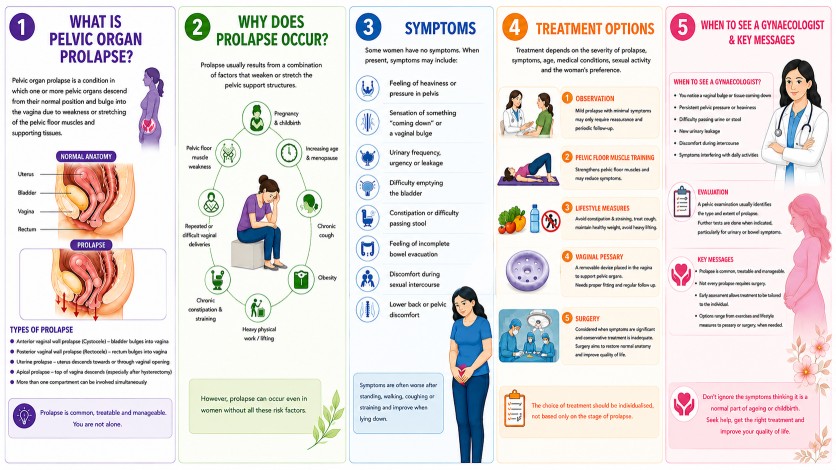
Pelvic organ prolapse is a common gynaecological condition in which one or more pelvic organs descend from their normal position and bulge into the vagina. Although prolapse is not usually life-threatening, it can significantly affect comfort, mobility, sexual life, bladder and bowel function, and overall quality of life.
Why does prolapse occur?
Prolapse usually results from a combination of factors rather than a single cause. Important risk factors include pregnancy and childbirth, particularly vaginal birth; increasing age and menopause; repeated or difficult vaginal deliveries; pelvic floor weakness; chronic constipation and straining; chronic cough; obesity; heavy physical work or lifting; previous pelvic surgery; and connective-tissue disorders.
Types of pelvic organ prolapse
- Anterior vaginal wall prolapse (cystocele): the bladder bulges towards the vagina.
- Posterior vaginal wall prolapse (rectocele): the rectum bulges towards the vagina.
- Uterine prolapse: the uterus descends towards or through the vaginal opening.
- Apical prolapse: the top of the vagina descends, particularly after hysterectomy.
More than one compartment may be involved at the same time.
What symptoms can occur?
Symptoms may include pelvic heaviness or pressure, a sensation of something coming down or a vaginal bulge, urinary frequency or urgency, difficulty emptying the bladder, urinary leakage, constipation or difficulty passing stool, incomplete bowel evacuation, discomfort during sexual intercourse, and lower back or pelvic discomfort. Symptoms may become more noticeable after prolonged standing, walking, coughing or straining and improve when lying down.
Does every prolapse require surgery?
No. Treatment depends on the severity of prolapse, symptoms, age, medical conditions, sexual activity, future pregnancy plans and how much the condition affects quality of life
Treatment options
- Observation - appropriate for women with mild prolapse and minimal symptoms.
- Pelvic floor muscle training - can improve pelvic floor strength and reduce symptoms, particularly in early-stage prolapse.
- Lifestyle measures - treat constipation and chronic cough, maintain a healthy body weight, and avoid unnecessary heavy lifting.
- Vaginal pessary - a removable device that supports the pelvic organs and can help women who want to avoid or postpone surgery.
- Surgery - considered when prolapse causes significant symptoms and conservative treatment is inadequate or unsuitable.
What about hysterectomy?
A hysterectomy is not automatically required for uterine prolapse. In selected women, uterus-preserving procedures may be appropriate. The choice depends on age, symptoms, uterine pathology, future fertility wishes and the woman's preference.
Can prolapse be prevented?
Not every case can be prevented, particularly when childbirth, ageing and genetic factors contribute. Maintaining pelvic floor health, preventing chronic constipation, treating persistent cough, maintaining a healthy weight and performing appropriate pelvic floor exercises can help reduce risk and may help prevent progression.
When should you see a gynaecologist?
Seek evaluation if you notice a vaginal bulge or tissue coming down, persistent pelvic pressure or heaviness, difficulty passing urine, difficulty emptying the bowel, new urinary leakage, discomfort during intercourse, or symptoms that interfere with daily activities.
The important message
Pelvic organ prolapse is common, treatable and manageable. Having prolapse does not mean that a woman necessarily needs surgery. Early assessment allows treatment to be tailored to the individual - from pelvic floor rehabilitation and lifestyle modification to pessary treatment or reconstructive surgery when required. If you notice a vaginal bulge or persistent pelvic pressure, do not simply accept it as a normal consequence of ageing or childbirth. A gynaecological assessment can identify the problem and help you choose the treatment that is right for you.
To book a consultation with Dr. Deepeka T. S. at CIMAR The Women's Hospital, Cheranaloor Thykkavu, Kochi, Kerala 682034 (Monday to Saturday, 9:30 AM to 4:30 PM).
Written by Dr. Deepeka T. S., MBBS (Govt. Madras Medical College, Chennai), MS Obstetrics and Gynaecology (Govt. Kilpauk Medical College, Chennai), MRCOG (Royal College of Obstetricians and Gynaecologists, London, UK), Clinical Fellowship in OG and Reproductive Medicine (Mie University, Japan), Fellowship in Reproductive Medicine (CIMAR, Kochi), Clinical Fellowship in Minimally Invasive and Pelvic Surgery (Sunrise Hospitals, Kochi, 2025), Consultant Obstetrics, Gynaecology and Reproductive Medicine, CIMAR The Women's Hospital, Bus Stop, 3/515-A, Tippu Sulthan Road, Cheranaloor Thykkavu, Kochi, Kerala 682034. Monday to Saturday, 9:30 AM to 4:30 PM.
Related reading
High-Risk Pregnancy Care: Warning Signs, Treatment Options, and Tips for a Healthy Delivery
IVF Success Rates Explained: Factors That Improve Fertility Treatment Outcomes in Women
Myths and Facts About AMH: What Your Result Actually Means for Your Fertility




Add a Comment