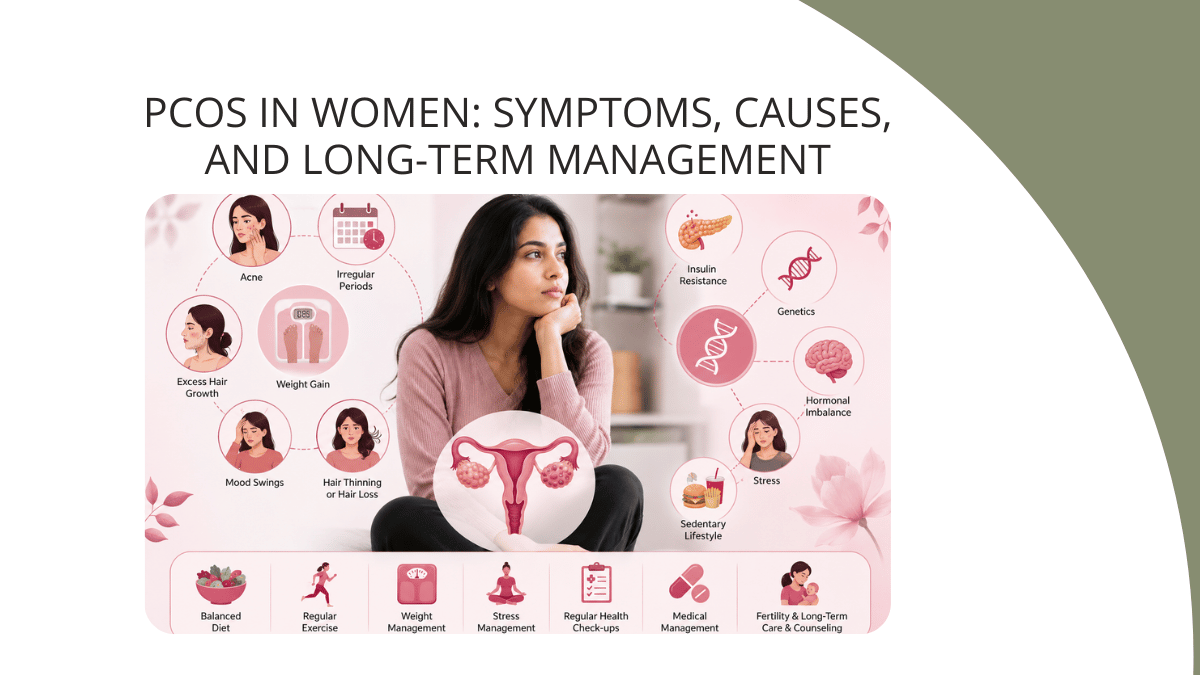
Polycystic Ovary Syndrome (PCOS) also known as Polyendocrine Metabolic Ovarian Syndrome (PMOS) is one of the most common hormonal disorders affecting women of reproductive age in India, estimated to affect between 9 and 22 women in every 100. It is not simply a gynaecological condition. PCOS affects the hormonal system, metabolism, and reproductive function. With the right diagnosis and a structured management plan, most women with PCOS lead healthy, fertile lives.
What Is PCOS and Why Does It Happen?
PCOS is a condition in which the ovaries produce higher-than-normal levels of androgens (male hormones), which disrupts the regular release of eggs. The word 'polycystic' refers to the multiple small fluid-filled sacs that may develop in the ovaries. These are not true cysts in the pathological sense. They are follicles that have not matured fully because ovulation has not occurred.
The precise cause is not fully understood, but several factors are known to play a role. Insulin resistance, in which the body's cells do not respond efficiently to insulin, leads to higher insulin levels in the blood. This in turn stimulates the ovaries to produce more androgens. Genetic predisposition also contributes: PCOS tends to run in families. Low-grade inflammation has also been identified as a factor that may stimulate androgen production in the ovaries.
PCOS is not caused by anything a woman has done. It is a complex metabolic and hormonal condition, and the goal of treatment is to manage it effectively over the long term.
What Are the Symptoms Women With PCOS Experience?
PCOS presents differently in different women. Some women have several symptoms; others may have only irregular periods with few other signs. The most common symptoms include:
- Irregular or infrequent periods, or periods that stop entirely
- Excess facial or body hair (hirsutism), particularly on the chin, upper lip, chest, or abdomen
- Acne on the face, chest, or back that does not resolve with standard skincare
- Thinning of hair on the scalp
- Difficulty losing weight or unexplained weight gain, particularly around the abdomen
- Darkening of skin in folds such as the neck, armpits, or groin (acanthosis nigricans)
- Difficulty conceiving
Not every woman with PCOS will have all of these symptoms. Some women with PCOS are of normal weight. A diagnosis of PCOS is made based on clinical history, blood tests, and an ultrasound scan, not on any single symptom alone.
How Is PCOS Diagnosed?
The Rotterdam criteria are the internationally accepted standard for diagnosing PCOS. A diagnosis requires at least two of the following three features:
- Irregular or absent ovulation (reflected in irregular or absent periods)
- Elevated androgen levels in the blood, or clinical signs of excess androgens such as hirsutism or acne
- Polycystic ovarian morphology on ultrasound (12 or more follicles in one or both ovaries, or increased ovarian volume)
I also request blood tests to assess hormone levels including LH, FSH, testosterone, and prolactin, along with fasting blood sugar, insulin, and a lipid profile. Thyroid function is checked to rule out thyroid disorders, which can mimic some PCOS symptoms. A thorough evaluation ensures we are treating the right condition with the right approach.
What Are the Long-Term Health Risks of Untreated PCOS?
PCOS is a condition that requires long-term attention, not just treatment of immediate symptoms. Women with PCOS who do not receive appropriate management have a higher risk of developing several conditions over time.
Type 2 diabetes is a significant concern. The insulin resistance underlying PCOS, if not addressed, can progress to impaired glucose tolerance and eventually diabetes. Studies published in journals including Human Reproduction have documented this association clearly.
Endometrial health is another area of concern. Irregular ovulation means the uterine lining (endometrium) is not shed regularly. Over time, this can lead to endometrial hyperplasia, a thickening of the lining that, in some cases, increases the risk of endometrial cancer.
Cardiovascular risk is also elevated in women with PCOS, related to higher rates of hypertension, dyslipidaemia, and obesity in this group. Mood disorders including anxiety and depression are more common in women with PCOS, likely related to both hormonal factors and the psychological impact of symptoms such as weight gain, acne, and hair changes.
Managing PCOS actively reduces these long-term risks. This is why I do not treat PCOS as a condition to be addressed only when a woman wants to conceive.
How Is PCOS Managed? Treatment Options Explained
There is no single treatment that works for every woman with PCOS. Management is individualised based on the woman's primary concerns, whether that is regulating periods, managing symptoms such as acne or hair growth, improving fertility, or reducing metabolic risk.
Lifestyle Modification
Lifestyle changes are the first and most important intervention for women with PCOS, regardless of weight. A structured programme of regular physical activity combined with dietary modification reduces insulin resistance, lowers androgen levels, and improves menstrual regularity. In women who are overweight, even a reduction of five to ten percent of body weight has been shown to restore ovulation and improve hormonal markers.
I advise patients to focus on a low-glycaemic diet that moderates blood sugar fluctuations, rather than following overly restrictive eating patterns. Regular exercise of at least 150 minutes per week, combining aerobic activity with resistance training, is recommended by the Indian Council of Medical Research for women with PCOS.
Medication for Menstrual Regulation and Hormonal Control
Combined oral contraceptive pills are commonly prescribed to regulate periods, reduce androgen levels, and improve symptoms such as acne and hirsutism in women who are not trying to conceive. They work by suppressing androgen production and protecting the endometrium by ensuring regular withdrawal bleeds.
Metformin, a medication widely used in type 2 diabetes, is prescribed in PCOS to address insulin resistance. It helps lower insulin and androgen levels and, in some women, improves menstrual regularity and ovulation. Anti-androgen medications may be added for women with significant hair growth or scalp hair thinning.
Fertility Management in PCOS
PCOS is a leading but treatable cause of infertility related to irregular ovulation. For women trying to conceive, ovulation induction with medications such as letrozole or clomiphene citrate is the standard first approach. Letrozole is currently preferred based on evidence showing higher ovulation and pregnancy rates in women with PCOS.
For women who do not respond to oral ovulation induction, injectable gonadotrophins or in vitro fertilisation (IVF) may be considered. I assess each woman individually before recommending a fertility pathway. The decision depends on the duration of infertility, the woman's age, her partner's reproductive health, and the full clinical picture.
Long-Term Monitoring
Women with PCOS benefit from regular monitoring even after symptoms are controlled. I recommend annual checks of fasting blood sugar and insulin, a lipid profile, blood pressure, and body weight. Endometrial evaluation is recommended if periods remain very irregular for extended periods. These reviews allow early detection of metabolic changes and adjustment of the management plan as needed.
PCOS and Mental Health: What Patients Should Know
The psychological impact of PCOS is significant and often underaddressed. Women with PCOS are more likely to experience anxiety and depression. The visible symptoms of PCOS such as acne, unwanted hair growth, weight changes, and fertility challenges can affect self-image and emotional wellbeing.
I discuss this openly with my patients. Treating the physical symptoms of PCOS does help the psychological dimension, but some women benefit from additional support. I refer patients to counselling or mental health services when appropriate. Acknowledging this aspect of PCOS is part of providing complete care.
Frequently Asked Questions About PCOS
Can PCOS be cured permanently?
PCOS cannot currently be cured, but it can be managed effectively. Many women find that their symptoms improve significantly with lifestyle changes and medication. The condition may change over time, particularly around pregnancy and menopause. Regular monitoring ensures the management plan remains appropriate.
Will PCOS affect my ability to get pregnant?
PCOS is associated with irregular ovulation, which can make conception more difficult. However, most women with PCOS are able to conceive with appropriate medical support. Ovulation induction treatments are effective for the majority of women. Seeking early evaluation is advisable if you have been trying to conceive for six months or more with irregular cycles.
Do I need to be overweight to have PCOS?
No. PCOS affects women of all body weights. A significant proportion of women with PCOS are of normal weight, a presentation sometimes referred to as lean PCOS. The hormonal and metabolic features of PCOS are present regardless of weight, though management approaches may differ.
Is PCOS the same as having multiple ovarian cysts?
Not exactly. Polycystic ovarian morphology on ultrasound refers to multiple small follicles that have not developed fully, not pathological cysts. A diagnosis of PCOS requires this finding along with other features. Having multiple follicles on ultrasound alone, without hormonal or menstrual irregularities, does not mean a woman has PCOS.
At what age does PCOS typically appear?
PCOS most commonly presents during the reproductive years, often in adolescence or the early twenties. It may first become apparent when periods do not establish regularly after puberty, or when a young woman notices symptoms such as acne, hirsutism, or difficulty managing weight.
Does PCOS go away after menopause?
The reproductive symptoms of PCOS, such as irregular periods and fertility challenges, resolve after menopause. However, the underlying metabolic features, particularly insulin resistance and cardiovascular risk, may persist. Long-term metabolic monitoring remains important after menopause for women who have had PCOS.
Written by Dr. Vineetha Kiran, MBBS, MS (Obstetrics & Gynaecology), Consultant Obstetrician, Gynaecologist & Cosmetic Gynaecologist, Kiran Speciality Hospital, Hassan.
Related Reading:
A) Vaginal Rejuvenation: Benefits, Procedure, and Recovery Explained
B) Labiaplasty Surgery: Cost, Procedure, and What to Expect
C) What is Vaginoplasty? Complete Guide for Women
👉 To book a consultation with Dr. Vineetha Kiran at Kiran Speciality Hospital, Hassan.

Add a Comment