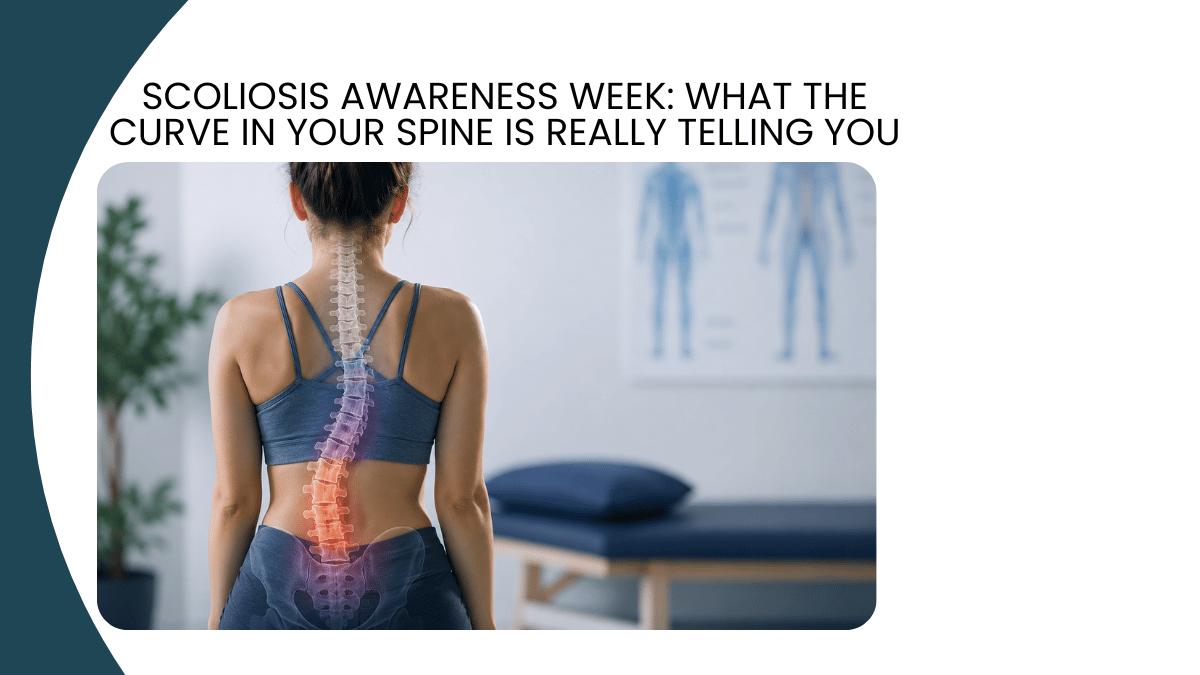
International Scoliosis Awareness Week, observed every year in June, is an opportunity to bring a condition out of the background and into a conversation that many families are not having soon enough. As a neurosurgeon specialising in spine surgery at SPARSH Hospital, Infantry Road, Bengaluru, I see patients across all age groups with scoliosis. What connects most of them is the same thing: by the time they arrive, the curve has been present and quietly progressing for longer than anyone realised.
What scoliosis actually is
Scoliosis is a lateral curvature of the spine. When viewed from behind, a healthy spine runs in a straight vertical line. In scoliosis, it curves to the side, sometimes in a single C-shape, sometimes in an S-shape involving two curves. It can occur at any level of the spine, and it can affect people across the full age range, from infants and adolescents to adults experiencing age-related spinal degeneration.
The most common form is adolescent idiopathic scoliosis, which develops between the ages of ten and sixteen and has no single identifiable cause. It tends to progress during periods of rapid growth, which is why it needs monitoring rather than just an initial diagnosis.
The signs that are easy to miss
Scoliosis is often painless in its early stages. This is precisely what makes it easy to overlook. The signs are postural rather than symptomatic, and they are subtle enough that they can be attributed to habit or posture. Knowing what to look for matters because early identification genuinely changes what is possible in terms of management. Signs of scoliosis in teenagers and children to watch for include:
- One shoulder sitting noticeably higher than the other
- One shoulder blade appearing more prominent when bending forward
- An uneven waistline or one hip sitting higher
- The head appearing off-centre when standing straight
- Clothes not hanging evenly despite the correct size
The Adam's forward bend test, where a child bends forward at the waist while an observer checks for asymmetry, is a reliable and simple screening method that can be done in a clinic in minutes. If any of these signs are present, a spine evaluation and X-ray are the appropriate next steps.
What treatment looks like
The approach to treatment depends on three things: the degree of curvature, the patient's age, and whether the curve is progressing. Small curves in growing adolescents are monitored at regular intervals. Moderate curves are often managed with scoliosis bracing options, which do not reverse the curve but can prevent it from worsening during the remaining growth period. Larger or rapidly progressing curves, particularly those above 40 to 50 degrees, may require surgical stabilisation.
In adults, degenerative scoliosis develops differently and treatment decisions balance pain, nerve compression, and functional limitation against surgical risk. The evaluation and management for adult scoliosis is distinct from adolescent scoliosis, and what is appropriate for one is not necessarily right for the other.
Why this week matters
Most people who have scoliosis do not know it until a curve has become significant. Awareness is the first step in the chain that leads to earlier detection, more treatment options, and better outcomes. If you have noticed asymmetry in a child's posture or have yourself been told you have a curved spine without a clear follow-up plan, this week is a good time to seek a proper evaluation.
To book a consultation with Dr Robin Gupta at SPARSH Hospital, Infantry Road, Vasanth Nagar, Bengaluru, call +91 85128 35890.
Written by Dr Robin Gupta, MBBS, MS General Surgery, MCh Neurosurgery, Consultant Neurosurgeon and Stroke Specialist, SPARSH Hospital, Infantry Road, Vasanth Nagar, Bengaluru.

Add a Comment