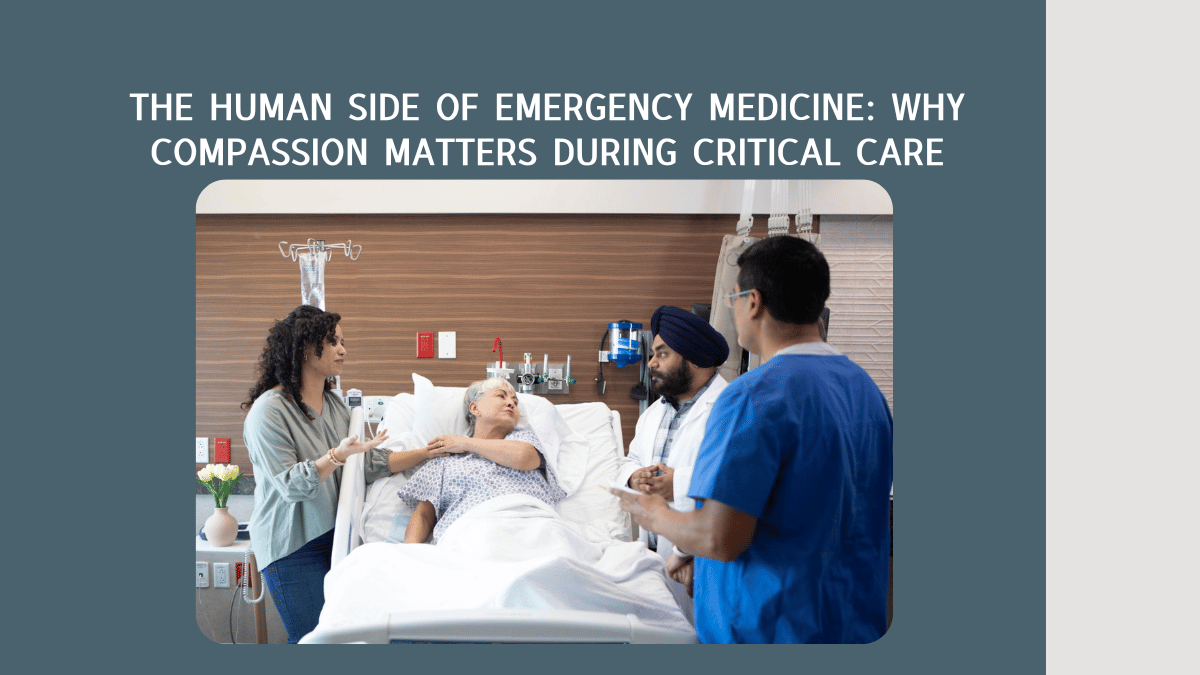
Emergency Medicine Is More Than Treatment
When people think about emergency medicine, they often imagine fast decisions, trauma care, life-saving procedures, and critical interventions. While all of these are important, there is another side of emergency care that matters deeply — compassion. As an Emergency Medicine Specialist, I have learned that patients may not always remember every medical detail, but they will always remember how they were treated during their most vulnerable moments.
In emergency care, patients and families often arrive frightened, anxious, and emotionally overwhelmed. Along with medical expertise, emotional reassurance and compassionate communication play a major role in helping patients feel safe and supported.
Why Compassion Matters in Critical Care
Over the years, I have seen how kindness and empathy can positively impact a patient’s experience during medical emergencies. In situations involving severe illness, trauma, or unexpected hospitalization, families are often dealing with uncertainty and fear. A calm conversation, a reassuring explanation, or even a few comforting words can make an enormous difference.
As doctors, we focus on providing the best critical care and emergency treatment possible, but compassionate care is equally important. Patients heal better emotionally when they feel heard, respected, and cared for as individuals.
The Emotional Side of Healthcare
Building Trust With Patients
Trust is one of the foundations of effective healthcare. During emergencies, patients need to feel confident that their doctor understands both their medical condition and emotional concerns. Clear communication and empathy help strengthen doctor-patient trust during stressful situations.
Supporting Families During Emergencies
In many cases, family members are just as distressed as the patient. Keeping families informed and emotionally supported is an essential part of emergency medicine. Compassionate communication helps reduce anxiety and creates a sense of reassurance during uncertain moments.
Small Gestures Matter
Simple actions like listening carefully, speaking calmly, or offering reassurance can have a powerful emotional impact. In healthcare, compassion is not always about big gestures sometimes it is about making patients feel seen, valued, and cared for.
Compassion Improves Healthcare Experiences
Modern healthcare is advancing rapidly with technology, diagnostics, and specialized treatments. However, the human connection between doctors and patients remains irreplaceable. Compassion improves the overall patient care experience, reduces fear, and helps patients cope better during medical emergencies.
As healthcare professionals, we are not only treating illnesses we are caring for people during some of the most difficult moments of their lives. That responsibility requires both clinical expertise and emotional understanding.
Conclusion
As an Emergency Medicine Specialist, I believe compassion is one of the most important parts of quality healthcare. Emergency medicine is not only about saving lives but also about supporting patients and families with empathy, kindness, and reassurance during critical situations. In moments of fear and uncertainty, compassionate care can provide comfort, trust, and emotional strength. Sometimes, healing begins not only with treatment, but with humanity itself.

Add a Comment