Chronic pain that has not responded to medication, physiotherapy, injections, or surgery is one of the most challenging conditions I manage at Royal Preston Hospital. For carefully selected patients, spinal cord stimulation offers a treatment that works differently from anything that has come before, by modifying how pain signals are processed within the nervous system rather than simply masking them. This guide explains what spinal cord stimulation is, who may benefit, how the procedure is performed, and what patients can realistically expect.
What is spinal cord stimulation and how does it work?
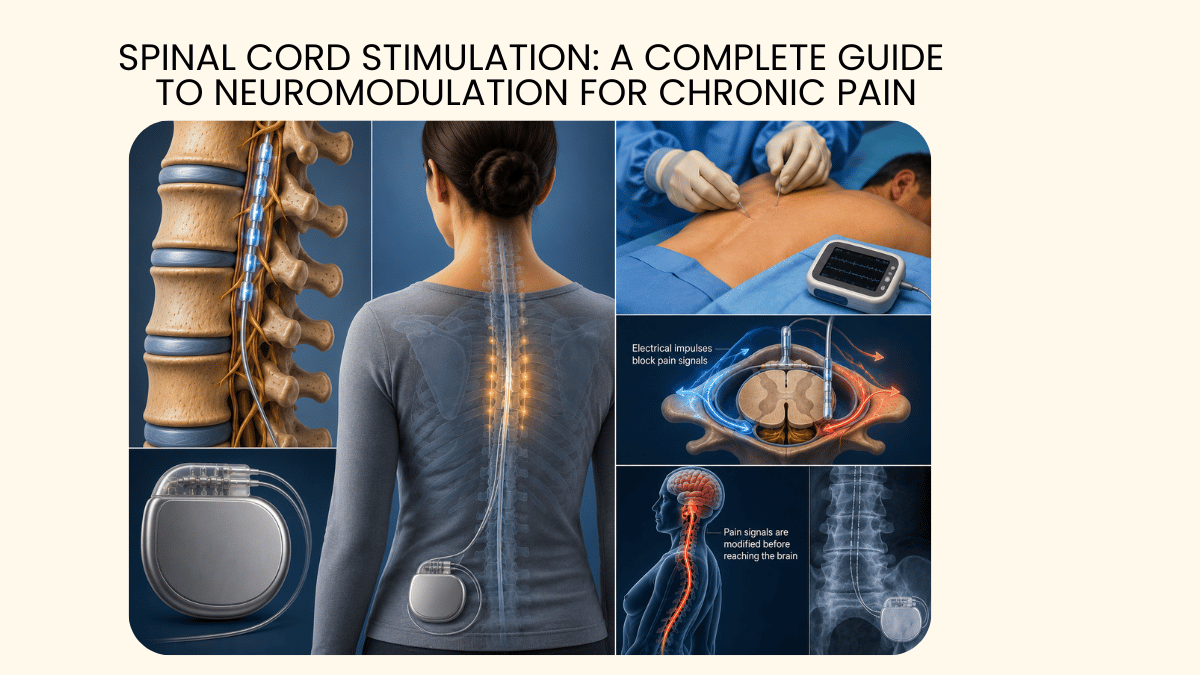
Spinal cord stimulation, or SCS, is a form of neuromodulation therapy, a treatment that uses electrical stimulation to alter the activity of nerves within the nervous system. A spinal cord stimulator consists of one or more electrodes placed within the epidural space surrounding the spinal cord, a small implanted battery known as a pulse generator, and a wireless programmer. The system delivers carefully controlled electrical impulses that alter the transmission of pain signals before they reach the brain, reducing the pain intensity many patients experience.
Although the precise mechanisms remain incompletely understood, spinal cord stimulation appears to reduce transmission of pain signals, alter pain processing pathways, and improve nervous system function. Modern stimulators can deliver different types of stimulation: conventional tonic stimulation, which produces a tingling sensation; high-frequency stimulation, which typically does not; and burst stimulation, which uses intermittent bursts that may better mimic natural neural activity. I determine the most appropriate technology based on each patient's specific condition.
Which conditions can spinal cord stimulation help?
Spinal cord stimulation is not suitable for every type of pain. It is generally most effective for chronic neuropathic pain, where pain arises from nerve injury or dysfunction rather than ongoing tissue damage. Common indications include persistent spinal pain syndrome, previously known as failed back surgery syndrome (FBSS), where patients continue to experience pain despite technically successful spinal surgery; chronic sciatic pain following nerve injury or surgery; complex regional pain syndrome (CRPS); peripheral neuropathic pain; and certain cases of chronic back and leg pain where further spinal surgery is unlikely to provide benefit.
Spinal cord stimulation tends to be less effective for predominantly mechanical back pain, widespread pain syndromes, untreated psychological disorders, active infection, or uncontrolled medical conditions. Careful patient selection is one of the most important factors influencing outcome.
How are patients assessed before proceeding?
Before proceeding, patients undergo a detailed assessment covering pain history, previous treatments, functional limitations, and current medication. Imaging including MRI is reviewed to ensure there is no surgically correctable cause of symptoms. Many centres, including our service at Royal Preston Hospital, utilise a multidisciplinary approach involving pain specialists, neurosurgeons, psychologists, and specialist nurses to determine whether SCS implantation is likely to provide meaningful benefit for a particular individual.
What is the SCS trial and why is it important?
One of the unique advantages of spinal cord stimulation is the ability to perform a temporary trial before permanent implantation. This allows patients to experience the therapy and assess its benefit before committing to a permanent device.
Under local anaesthetic and light sedation, temporary electrodes are inserted into the epidural space through a needle and connected to an external battery worn outside the body. Patients return home and use the system for several days. Success is not determined solely by pain scores. Important measures include reduction in pain, improved mobility, improved sleep, reduced medication use, and improved quality of life. Many centres look for approximately 50 per cent improvement, though individual goals vary.
What does permanent SCS implantation involve?
If the trial is successful, permanent implantation can be arranged, usually as a day-case or overnight stay. Leads are positioned within the epidural space using X-ray guidance and may be percutaneous leads or paddle leads depending on the system. A small pulse generator is then implanted beneath the skin, most commonly in the upper buttock, lower back, or abdominal wall, with leads connected to the battery using extension cables placed beneath the skin. The system is programmed after implantation and adjusted to suit individual requirements. Most patients receive a handheld controller allowing limited adjustment within safe parameters.
What benefits can spinal cord stimulation provide?
For carefully selected patients, benefits may include meaningful reduction in neuropathic pain, improved function facilitating walking and daily activities, improved sleep, reduced reliance on pain medication, and greater independence and participation in normal activities. It is important to have realistic expectations. Spinal cord stimulation does not cure the underlying condition, does not work for everyone, does not eliminate all pain, and may become less effective over time in some patients. The goal is meaningful improvement rather than complete pain relief.
What are the risks of spinal cord stimulator surgery?
All surgical procedures carry risk. Serious complications are uncommon, but it is important that patients understand them before proceeding. Infection is one of the most significant complications and may involve the wound, leads, or pulse generator. Occasionally the entire system must be removed to eradicate infection. Other risks include bleeding, cerebrospinal fluid leak, lead migration from the original position which may require revision surgery, lead damage or fracture, device failure, and pain at the implant site.
Neurological injury is rare but recognised, with potential consequences including weakness, numbness, bladder dysfunction, and bowel dysfunction. Paralysis is extremely rare but remains a recognised risk of spinal procedures involving the epidural space. Despite careful assessment and a successful trial, some patients do not achieve long-term benefit. General anaesthetic risks include heart complications, pneumonia, deep vein thrombosis, and pulmonary embolism.
What does recovery look like after SCS implantation?
Most patients go home on the same day or the following morning. Recovery is generally quicker than after major spinal surgery. In the first two weeks, mild wound discomfort is common, bending and twisting are limited, and walking is encouraged. Between two and six weeks, activity increases progressively alongside optimisation of device settings. From six weeks onwards, most patients return to normal activities with ongoing adjustments to maximise benefit. Patients are advised to avoid excessive bending, twisting, and heavy lifting during the initial healing period to minimise lead movement.
What is it like to live with a spinal cord stimulator?
Modern spinal cord stimulators are highly sophisticated devices. Many systems allow wireless charging, remote programming, multiple stimulation programmes, and smartphone integration. Most patients adapt quickly to daily use of the device. Regular follow-up appointments help ensure optimal performance.
Questions patients ask me most often
Will the stimulator cure my pain?
No. The aim is meaningful pain reduction and functional improvement rather than complete elimination of pain.
Will I feel the stimulation?
Some systems produce a tingling sensation. Others, particularly high-frequency devices, operate without any noticeable sensation.
Can the stimulator be removed?
Yes. The system can usually be removed if necessary.
How long does the battery last?
Battery lifespan varies according to usage and device type. Rechargeable systems often last many years before replacement is required.
Can I have MRI scans with a spinal cord stimulator?
Many modern systems are MRI conditional. Specific restrictions vary depending on the device model, and I advise each patient individually regarding MRI compatibility based on the specific system implanted.
Is spinal cord stimulation available on the NHS?
Spinal cord stimulation is available through the NHS for selected patients meeting specific clinical criteria. A referral to a specialist neuromodulation service is usually required. I can advise on whether NHS funding is likely to be applicable for your specific situation.
If you are living with chronic pain that has not responded adequately to conventional treatment, I would be happy to discuss whether spinal cord stimulation or another neuromodulation therapy may be appropriate for your situation. To book a consultation with Mr Anantharaju Prasad at Royal Preston Hospital, Preston, call 01772 522740.
Written by Mr. Anantharaju Prasad, MBBS, DNB (Neurosurgery), FRCS (SN), Consultant Neurosurgeon, Royal Preston Hospital, Sharoe Green Ln, Fulwood, Preston PR2 9HT, United Kingdom.
Mr. Anantharaju Prasad
MBBS, DNB (Neurosurgery), FRCS (SN)
Royal Preston Hospital, Sharoe Green Ln, Fulwood, Preston PR2 9HT, United Kingdom

Add a Comment