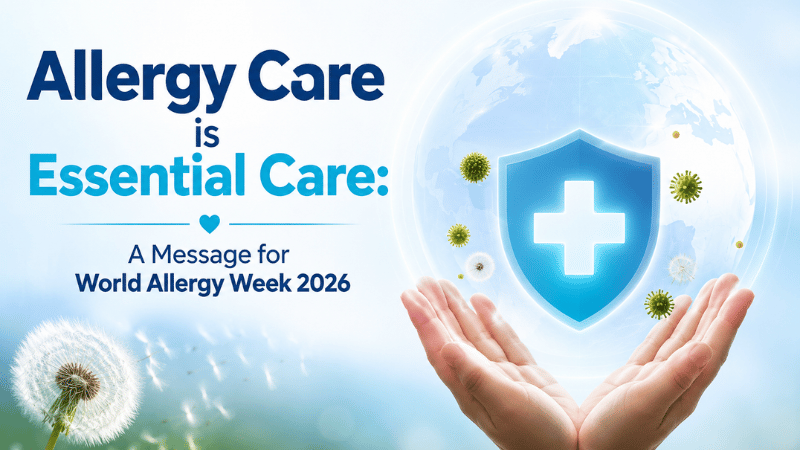
World Allergy Week is observed every year in June as a global initiative to raise awareness about allergic diseases and the communities they affect. This year, the World Allergy Organisation has chosen a theme that resonates deeply with what I see every day in my clinic at Mother and Child Care Centre, Koramangala: Allergy Care is Essential Care. It is a simple statement, but it carries something important. Allergy is still frequently dismissed as a minor inconvenience. For a significant proportion of the patients I see, it is not.
Why allergy care is often delayed
In India, allergic diseases are common and growing. Allergic rhinitis, asthma, eczema, food allergies, and urticaria collectively affect a substantial portion of the population, including a very high proportion of children. Yet many patients arrive at my clinic having managed symptoms on their own for years, with over-the-counter antihistamines, without ever receiving a formal diagnosis or understanding what is actually driving their symptoms. Part of this delay is awareness. Part of it is the mistaken belief that allergy testing is only for severe cases. Part of it is social normalisation, a child who always has a blocked nose is described as prone to colds, not as potentially having untreated allergic rhinitis.
What allergy care actually involves
Allergy care is not just a prescription for antihistamines. It begins with a proper clinical assessment of the pattern and severity of symptoms, followed where appropriate by skin prick testing to identify the specific allergens responsible. That information changes everything. Avoidance advice that is targeted rather than generic. Medication that is matched to the type of allergy and the degree of impact on daily life. And in appropriate cases, allergen immunotherapy, the only treatment that can change the underlying allergic response rather than simply suppress symptoms.
Who should seek allergy evaluation?
This week, I want to encourage parents and patients to think about allergy evaluation if any of the following apply:
- Nasal congestion, sneezing, or a runny nose that persists well beyond the duration of a viral infection, or that recurs at the same time each year
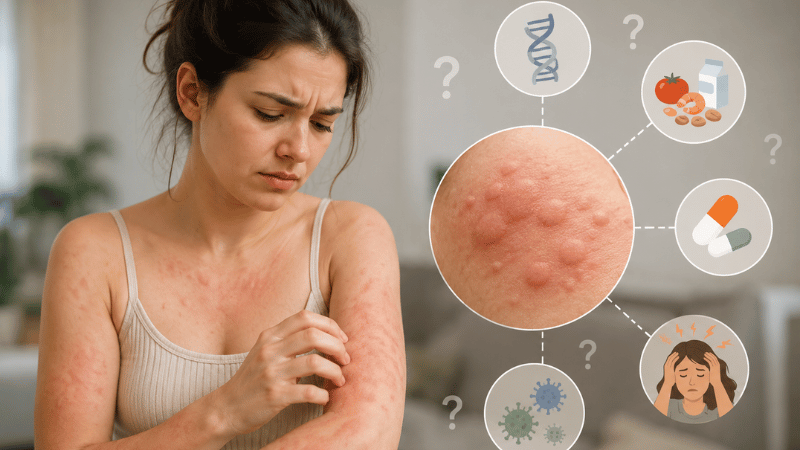
- Skin symptoms such as recurring hives, eczema, or unexplained rashes that have not been properly attributed to a cause
- A known food allergy that has never been formally assessed or had an action plan put in place
- Any patient who is taking regular antihistamines or nasal medication and has never been asked why the allergy is happening in the first place
Allergy care is long-term care
Allergic disease is a chronic condition that changes over time. A child's sensitisation profile at age three may look different at age ten. Asthma that is well controlled at one point may need treatment adjustment as triggers and environment change. The value of ongoing allergy care in children is not just in the initial diagnosis but in the relationship between patient, family, and specialist that allows the management plan to evolve as the patient does.
On World Allergy Week 2026, if you or your child has symptoms that might be allergy-related and has never been properly evaluated, that is the one action worth taking this week. A diagnosis is the beginning of management. To book a consultation with Dr Gnanamurthy N at Mother and Child Care Centre, Koramangala, Bengaluru, call +91 63666 69168
Written by Dr Gnanamurthy N, MBBS, DCH, FIAP, AASC, FAAP, ICPP, Paediatrician and Allergy and Asthma Specialist, Mother and Child Care Centre, Koramangala, Bengaluru.

Add a Comment