Hello! I am Dr. Balachandra BV,
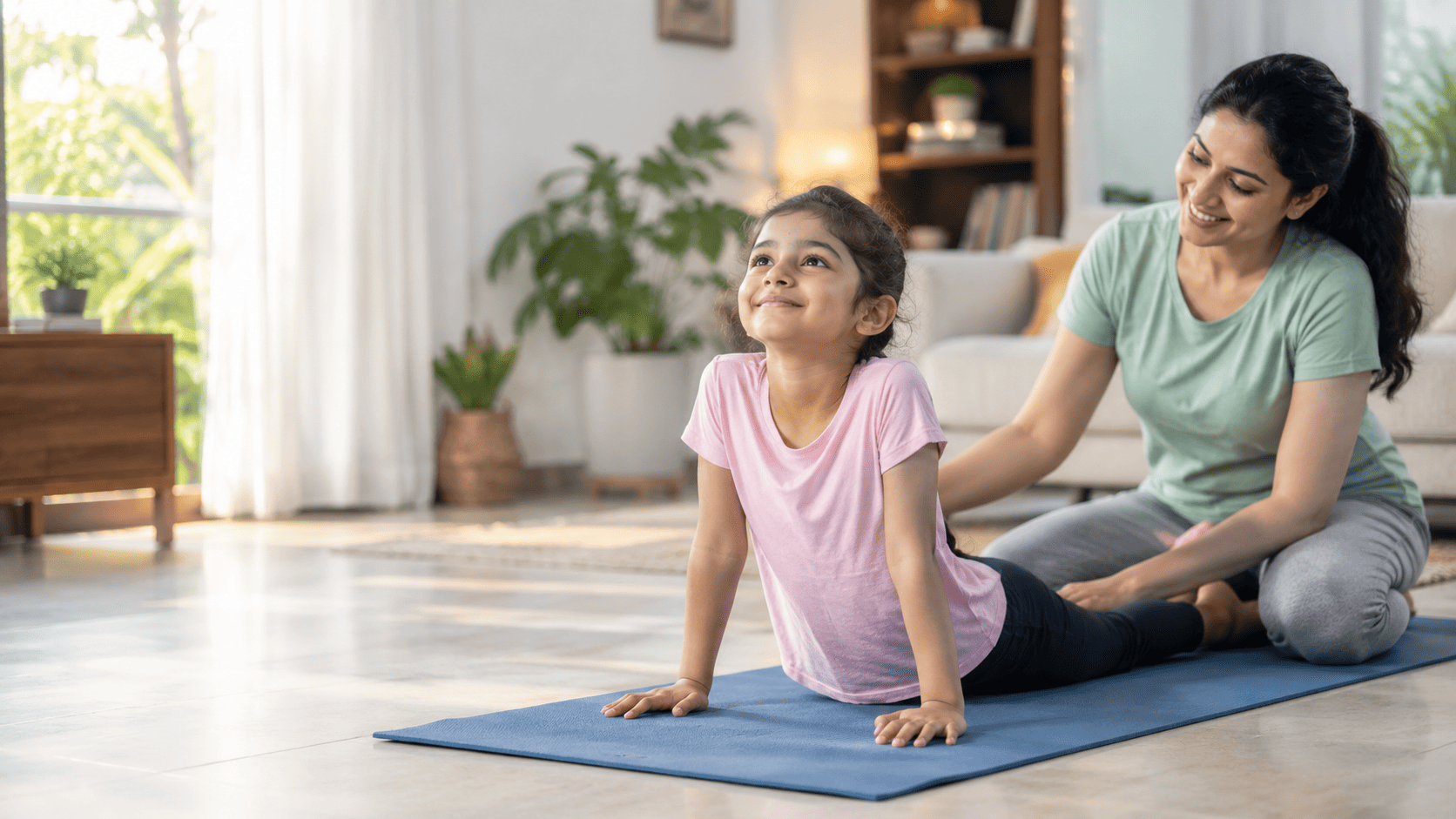
When parents think about their child's health, they often focus on food, sleep, studies, and physical activity. But there is another simple practice that can support a child's physical fitness, concentration, emotional wellbeing, and resilience - yoga.
Yoga combines body postures (asanas), breathing practices (pranayama), meditation, and character development. It is a wellness practice and is not a religious practice, making it suitable for children from different backgrounds.
At What Age Can Children Start Yoga?
According to the parent education guide:
• 5–10 years: Keep yoga playful with animal poses and games.
• 10–15 years: Introduce practices such as Surya Namaskara and pranayama.
• 15–18 years: Age-appropriate advanced poses and meditation can be introduced.
A trained instructor should guide children, with parents present during sessions for younger children.
What Are the Benefits of Yoga for Children?
Regular, age-appropriate yoga may support:
Physical health: Strength, flexibility, balance, and lung and heart fitness.
Cognitive development: Memory, attention, planning, and academic focus.
Emotional wellbeing: Better mood, reduced anxiety, improved sleep, and resilience.
Sports performance: Breath control, recovery, injury prevention, and physical performance.
A Simple Yoga Routine for Children
A beginner-friendly routine can include:
- Warm-up: About 5 minutes of gentle joint movements.
- Surya Namaskara: Age-appropriate rounds as guided by an instructor.
- Asanas: Butterfly, Cat-Cow, Warrior, Bridge, and Mountain poses.
- Pranayama: Practices such as Nadishuddhi and Bhramari under appropriate guidance.
- Shavasana: 3–5 minutes of quiet rest to finish the practice.
The guide suggests around 20 minutes of yoga, 3–5 days a week as a practical routine for children.
Yoga Safety: When Should Children Be Careful?
Yoga should always be comfortable and age-appropriate. Children should not be pushed into positions that cause pain.
Avoid yoga during fever, flu, vomiting, or acute illness. Children with epilepsy, heart disease, back problems, or a recent injury or surgery should receive appropriate medical guidance before certain practices.
Frequently Asked Questions
At what age can children start yoga?
Children can generally start age-appropriate yoga from around 5 years of age.
Is yoga good for children's concentration?
Yoga may support attention, memory, planning, and academic focus as part of a healthy routine.
How often should children practise yoga?
A practical routine is around 20 minutes, 3–5 days a week, depending on the child's age and ability.
Can children do yoga when they have fever?
No. Children should avoid yoga during fever, flu, vomiting, or acute illness and resume when they have recovered.
Is yoga safe for every child?
Yoga can be adapted for many children, but those with medical conditions or recent injuries should receive appropriate medical advice before practising specific poses or breathing exercises.
Final Thoughts
Yoga doesn't have to be complicated. For children, it can simply be a few minutes of movement, breathing, relaxation, and mindful practice incorporated into their weekly routine.
The goal is not perfect poses. The goal is to help children develop a healthy relationship with their body, breathing, mind, and emotions.
For guidance on age-appropriate physical activity, breathing practices, or your child's overall health and wellbeing, consult Dr. Balachandra B V, Consultant Pediatrician & Allergy Specialist, Chirayu Multispeciality Clinic Kasturi Nagar, Bangalore.



Add a Comment