Hello! I am Dr. Balachandra,
One question I often hear from parents is: “What toys or sports are best for my child?”
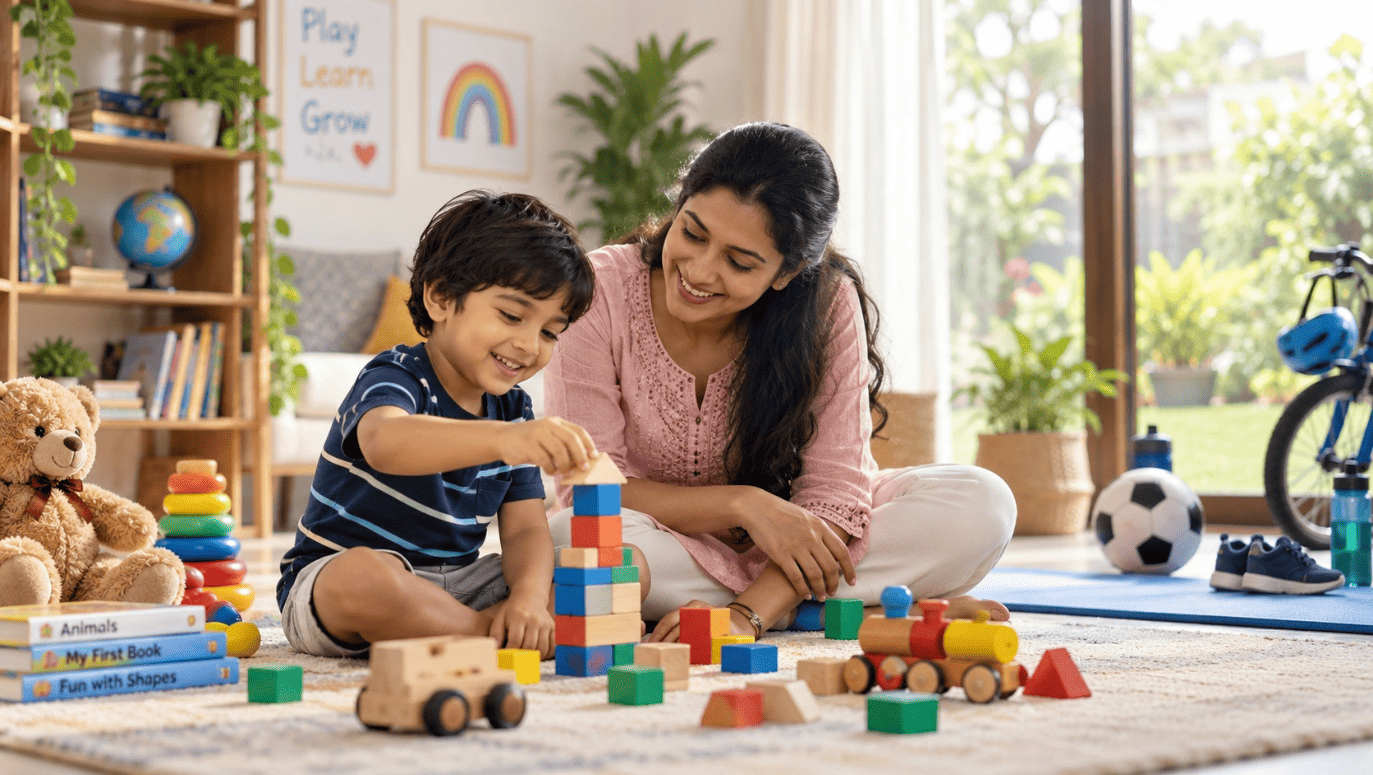
The answer is simpler than choosing the most expensive toy or enrolling your child in intensive coaching. Play itself is an important part of childhood learning, development and physical activity.
Choosing Toys According to Age
Toys should match your child's developmental stage:
• From 2 months: Sensory toys such as rattles and textured objects.
• From 1 year: Blocks, puzzles and books.
• From 1½ years: Pretend-play toys such as dolls and kitchen sets.
For children under 3, avoid toys with small or sharp parts and check for the BIS/ISI mark.
How Much Physical Activity Do Children Need?
The guide recommends:
• 1 - 4 years: Around 3 hours of activity spread throughout the day.
• 3 - 5 years: Active play throughout the day.
• 5 - 17 years: At least 60 minutes of moderate-to-vigorous physical activity.
Outdoor play is especially valuable, but younger children should be appropriately supervised. The guide recommends supervision until at least 6 years of age.
Let Children Enjoy Their Sport
Sports can build fitness, coordination, confidence and social skills. Rather than forcing a particular sport, offer different activities and allow your child to discover what they enjoy.
For contact sports, appropriate protective equipment and prompt attention to injuries are important.
What Parents Should Do
• Let your child choose what and how they play.
• Expose them to different sports.
• Adapt activities when your child has special needs.
• Watch for excessive training and injuries.
• Make time for free play every day.
What Should Parents Avoid?
• Allowing screens to replace active play.
• Forcing a sport or competitive level.
• Ignoring unsafe or overly aggressive play.
When Should You Be Concerned?
Pay attention if your child has recurrent sports injuries, becomes excessively focused on “bulking up,” or appears pressured and no longer enjoys the activity.
Frequently Asked Questions
Are expensive toys better for children's development?
Not necessarily. Simple materials and your attention can be more valuable than expensive toys.
Should I choose my child's sport for them?
Offer different sports and allow your child to discover what they enjoy.
How much exercise does a school-age child need?
The guide recommends 60+ minutes of moderate-to-vigorous activity daily for ages 5–17.
Are screens harmful to play?
Screens should not replace opportunities for physical and free play.
When should I worry about my child's sports participation?
Repeated injuries, excessive focus on muscle building, or feeling pressured rather than enjoying the sport are warning signs.
Final Thoughts
Play is not a break from learning - it is how children learn.
Give your child opportunities to explore, move, imagine, create and play with you. The most important thing isn't having the latest toy or the best coaching academy. It is giving children the freedom, time and encouragement to play.
For guidance about your child's growth, development, physical activity, sports participation or overall wellbeing, consult Dr. Balachandra B V, Consultant Pediatrician & Allergy Specialist, Chirayu Multispeciality Clinic, Kasturi Nagar, Bangalore.



Add a Comment